Showing posts with label Yin and Yang. Show all posts

Saturday, May 7, 2016

Obligate Seeders

Fort McMurray wildfires
Smoke travelled 1130 miles overnight from the Fort McMurray wildfires, drifted into the window before daybreak, bringing the scent of burning pitch.

In Chinese cosmology, Yin and Yang is a metaphorical construct of opposing but complimentary forces. The continuous joining and separation of Yin and Yang regulates the rise and disappearance of all entities and phenomena in the cosmos.

A theme in the poem Fire Flowers by E. Pauline Johnson, first printed in a Canadian newspaper in December 1894, is that from desolation comes renewal.


The poet's personified purple-headed wild flowers emerge from the desolation of fire. Life revives. Life's resilience is its wonder.

If Yin is the tender green shoot, then Yang is the fire's heat that melted its seed coat.

In apparent cyclical perpetuity, death is the catalyst. Plants with fire-activated seed coats germinate and grow soon after the fire recedes. Such plants are called obligate seeders.


Elk Bath
A wildfire in the Bitterroot National Forest
by John McColgan

Obligate means to oblige, compel or commit, which are actions with an implied interdependence like the continuous joining and separation of Yin and Yang. In a analogous way, all living things become obligate seeders.


REFERENCES

Saturday, July 26, 2014

Water Reservoir

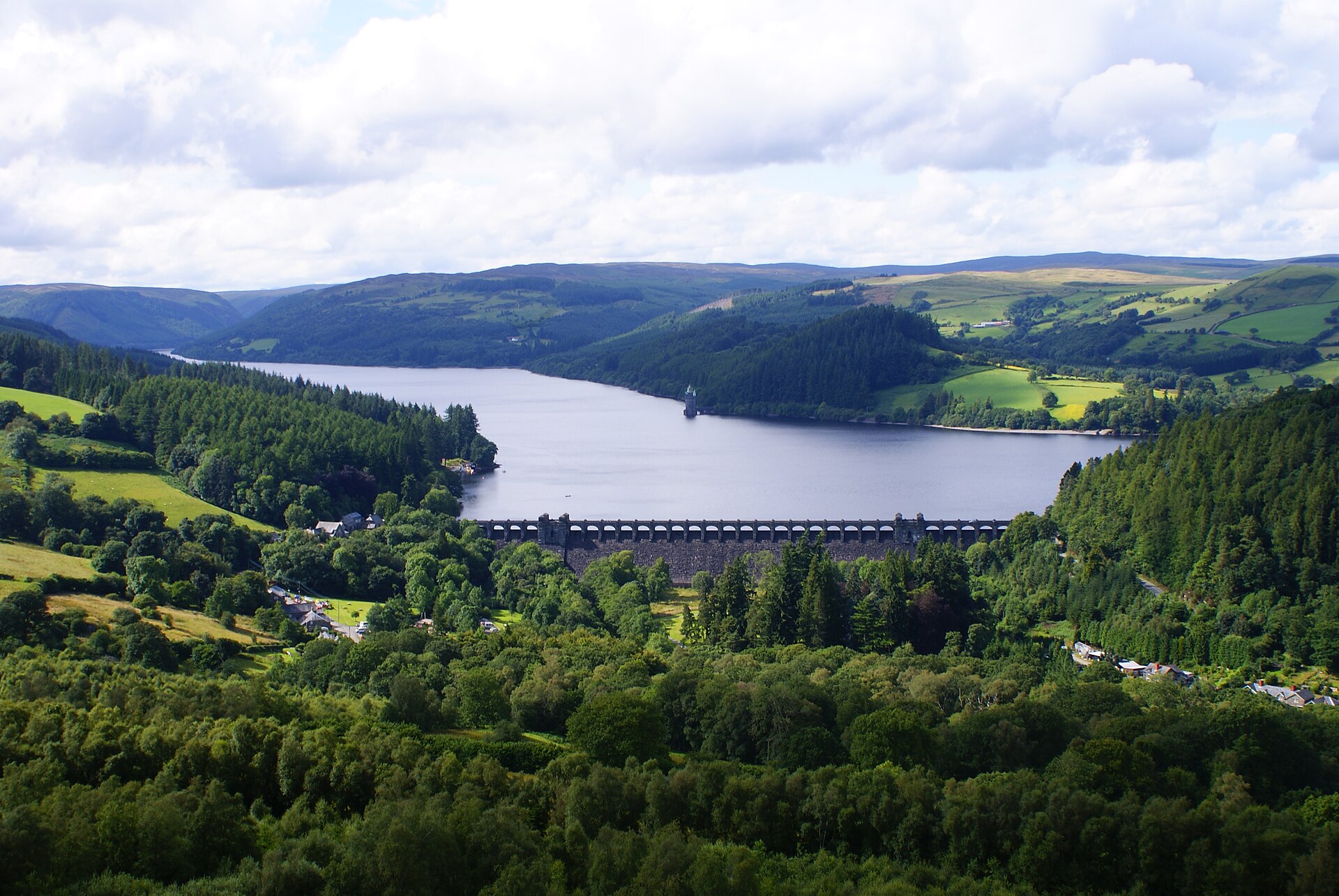
Reservoirs store water in reserve for our consumption.

Natural or anthropogenic lakes, storage ponds, or impoundments from damming are used as water reserves.
“We never know the worth of water till the well is dry.”
― Thomas Fuller (1608-1661)
The word reservoir is from the French réservoir meaning storehouse.

Essential for Life

Water is essential for life on Earth. Water is a constituent of the fluids in all living organisms.
“Life in us is like the water in a river.”
― Henry David Thoreau
Water is abundant in parts of the world, yet more than 1.1 billion humans have no potable water. Fresh water reserves are unevenly distributed around the world.
"We are living on the planet as if we have another one to go to.”
― Terri Swearingen
Reservoirs in the Universe
Golden rings of star formation

Water is produced as a byproduct of star formation.

The components of water molecules, hydrogen and oxygen, are among the most abundant elements found in the universe.

Astronomers have detected evidence of water on the Moon, Mars, Jupiter's moons, and in comets.

Water has also been detected in interstellar clouds in the Milky Way. It is hypothesized that water exists in abundance in galaxies beyond the Milky Way. A massive cloud of water vapor has been observed feeding a black hole in a galaxy 12 billion light-years away.

Exoplanets have been confirmed to hold water. Despite these findings, detecting the presence of water on planets outside our solar system might be rarer than previously assumed (cf., Hunt for Water on Earth-like Exoplanets More Challenging Than Previously Thought).

Yin and Yang

Opposing phenomena like abundance and scarcity seem strangely interconnected in nature. Although counter-intuitive the abundance and scarcity of water seems more inter-related than contrarian.
“Water is the driving force in nature.”
― Leonardo da Vinci
Like yin and yang in Chinese philosophy, the abundance and scarcity of water seems to be complementary facets of an integrated phenomena we have yet to comprehend.

REFERENCES

Saturday, June 21, 2014

As The Day is Long

It's summer solstice in the Northern Hemisphere.

Summer Solstice Sunrise at Stonehenge

Summer solstice marks the longest period of daylight in the year. The sun is at its farthest point north of the Equator.
This is the solstice, the still point
of the sun, its cusp and midnight,
the year’s threshold
and unlocking, where the past
lets go of and becomes the future;
the place of caught breath…
― Margaret Atwood, Eating Fire: Selected Poetry 1965-1995
The word solstice comes from the Latin from sol meaning sun, and stare, or sistere, meaning to stand or stop.

Yin & Yang

The solstice is an astronomical occasion, but also has historical, mythological, and cultural significance.

From Chinese legend today is a celebration of yin, earth, and femininity. Today is winter solstice in the Southern Hemisphere. Winter solstice corresponds to a winter celebration of yang.

Happiness & Daylight

Psychologists have found a correlation between daylight and a measure of happiness.
We identified individual-level diurnal and seasonal mood rhythms in cultures across the globe, using data from millions of public Twitter messages. We found that individuals awaken in a good mood that deteriorates as the day progresses—which is consistent with the effects of sleep and circadian rhythm—and that seasonal change in baseline positive affect varies with change in daylength.
― Golder & Macy, Science
Summer solstice in an opportunity to experience the fullness of the day.
“We all shine on...like the moon and the stars and the sun.”
― John Lennon

REFERENCES

Saturday, September 8, 2012

The Mountain River Sūtra

The earth presents its inhabitants with seemingly endless enrichment and, when we are most lucky, fleeting opportunity for enlightenment. In River Run Dance, I wondered about the metaphysics of water molecules flowing in a river.
Would we need to trace a water molecule to know that water flowing through a river is never the same water?
I have the same wonder about mountains. What is the beginning of a mountain? Do mountains have a beginning and an end? Yes and no.

Orogeny and Erosion

Orogeny and erosion are a mountain's yin and yang. Orogeny encompasses the events leading to the deformation of the Earth's crust because of the engagement of tectonic plates.

From plate collision, a mountain begins.

Erosion refers to soil and rock that is transported by wind or water flow to other locations.

From transporting winds and water flow, a mountain ends.

Does it matter if a mountain has a beginning and an end?

Perhaps we only need revel in the endlessness and the continuity we experience.
Revel in the endlessness, the endless repetition - the mountains forming, the rivers flowing, and the planet rotating and orbiting to change our light and to change our seasons.
An Earth Verse by poet Gary Snyder:
Earth Verse

Wide enough to keep you looking
Open enough to keep you moving
Dry enough to keep you honest
Prickly enough to make you tough
Green enough to go on living
Old enough to give you dreams

from Mountains and Rivers Without End

A Sūtra

Gary Snyder refers to his the poems in Mountains and Rivers Without End as a sūtra - a collection of words woven to embody a general truth. The literal meaning of the sūtra is a thread or a line that holds things together. The word sūtra is similar in derivation to the medical term suture.

Mr. Snyder's Mountains and Rivers Without End was inspired by a 17th century ink on paper handscroll of the same name.

Mountains and Rivers Without End
Handscroll; ink on paper
Lu Yuan, mid- to late 17th century, China

Popular