Showing posts with label Marcel Proust. Show all posts

Saturday, November 2, 2013

A Patch of Sky

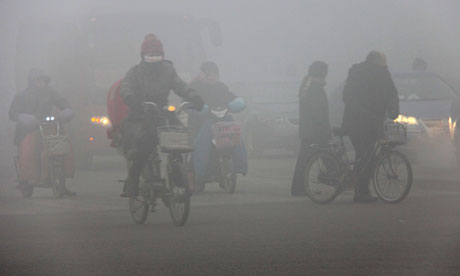
The word smog is a combination of the words smoke and fog referring to smokey fog. The word was coined in the early 20th century in London to describe a phenomena that became increasingly common to industrial cities.

Pea soup fog was a phrase used to denote air pollution that occurred in 19th century to mid 20th century in London. The source of London's pollution was the burning of coal for power.

Coal-generated power creates air-born particulates (soot, smoke, sulfur dioxide and other components). Coal-fired pollution has been a concern in London since the middle ages. King Edward I briefly banned coal fires in 1306.
“Always try to keep a patch of sky above your life.”
― Marcel Proust, Swann's Way
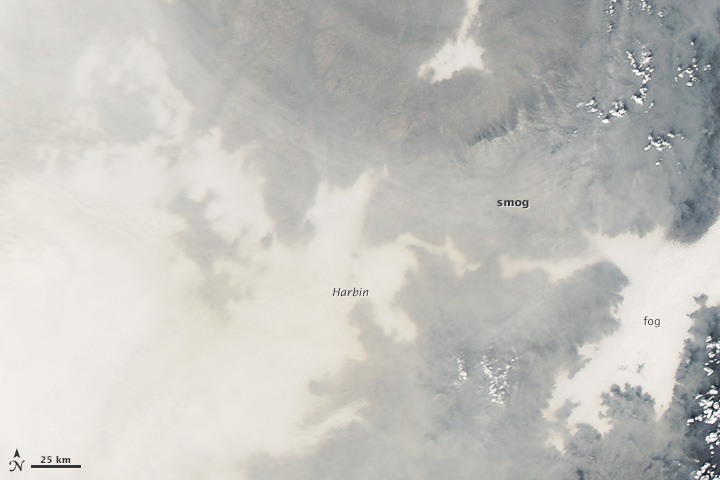
Harbin, China
October 21, 2013

Harbin, a city in China with more than 10 million people, was recently shut down because of high levels of pollution. The city's Air Quality Index (AQI) spiked to 500. For comparison, an AQI of 300 is deemed hazardous to human heath.
Beijing, China
Yānwù or 煙霧 is the Chinese word for smog.
Coal fired power combined with a four-fold increase in the number of cars over the past 10 years in China has caused acute smog conditions during the heating season.

An estimated 1.2 million Chinese people die from air pollution every year.

The sky is the daily bread of the eyes.
― Ralph Waldo Emerson

REFERENCES

Saturday, June 29, 2013

June of Every Calendar

In one full rotation of the earth, we observe the appearance and disappearance of sunlight. The diurnal cycle of the earth is one of many reoccurring patterns by which we experience time. We also experience time by witnessing seasonal changes and by observing life cycles.

Physicists and cosmologists have long puzzled over the nature of time.

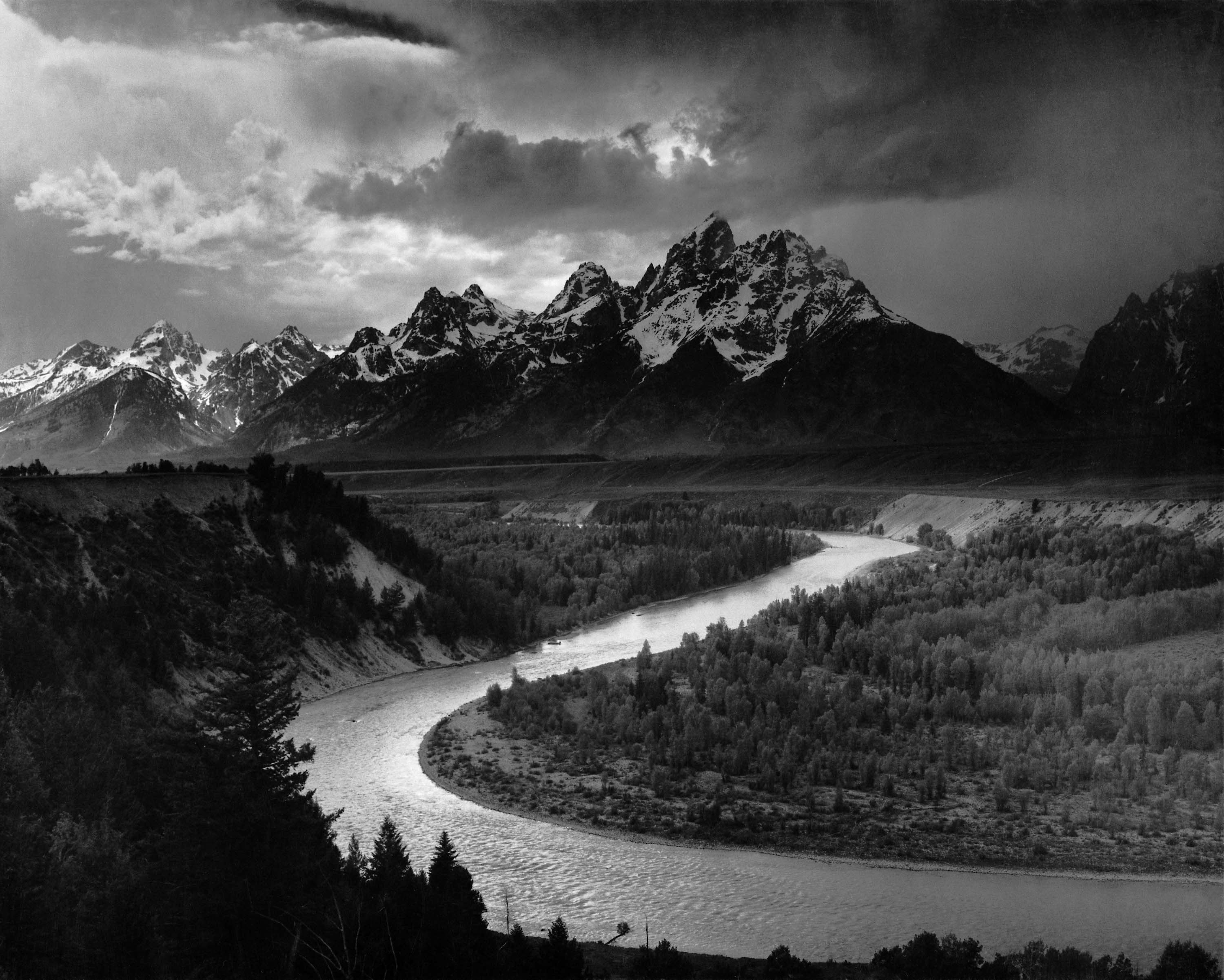
Turning the calendar page of June, I am struck by the artificiality of time. In Snake River Overlook, I write of Ansel Adams' photograph of the Snake River flowing south past the Tetons that it's the:
"June of every calendar"
The Tetons and the Snake River, 1942.
Ansel Adams, 1902 – 1984
The subject, quality of light, and composition of Adams' grand image strikes a universal chord. Like the predictable cycles of sunlight, or the predictable ticks of a metronome, Adam's dramatic image is memorable enough to become popular iconography.
“Green was the silence, wet was the light, the month of June trembled like a butterfly.” ― Pablo Neruda, 1904 – 1973.
Like clocks, calendars are a relatively recent invention that give us analogs to diurnal and seasonal events. We mark time by calendars. Calendars and clocks name and objectify what we can sense with less precision. Clocks and calendars allow us to attend to time and arrive at appointments at the appointed time.

Time is like months rendered in panels. Which panel is June? Is it the panel behind, the panel ahead, or both?

Pine Trees (ink on six folded screens)
Hasegawa Tōhaku, 1539 - 1610
Time is a voyage of moments. Moments are neither discrete or continuous. It is time that affords us the distance to mark milestones, but perhaps more urgently, it is time that gives us the space for discovery.
“The real voyage of discovery consists not in seeking new landscapes, but in having new eyes.” ― Marcel Proust

Saturday, August 25, 2012

Discovery and Natural Wonder

Wind Canyon  10 Aug 2012
Coming upon a natural wonder, it's human nature to consider the notion of discovery.
Who was the first to witness this?
We romanticize discovery. But what is the nature of true discovery?

We imagine ourselves the fortuitous first-discoverer, but perhaps we overlook an important aspect of discovery.
The real voyage of discovery consists not in seeking new landscapes but in having new eyes. ― Marcel Proust
We sow the seeds of discovery by adopting Beginner's Mind. Discovery begins when we see the world through fresh eyes.
It is a wholesome and necessary thing for us to turn again to the earth and in the contemplation of her beauties to know the sense of wonder and humility.
― Rachel Carson, excerpt from The Sense of Wonder
We cultivate the probability of discovery when we shed the baggage of expectations to meet the world with openness.
When I am a beginner, everything is discovery.

Tower Fall

Year after year, I discover and re-discover natural wonders. I fancy myself an explorer seeing things for the first time. I wonder about these natural wonders. I romanticize the history of these sacred places.
Cherish these natural wonders, cherish the natural resources, cherish the history and romance as a sacred heritage, for your children and your children's children. ― Theodore Roosevelt
Tower Fall is one such natural wonder I have romanticized.

Six days into the Yellowstone Expedition of 1870, Lieutenant Gustavus Doane describes Tower Fall in his journal:
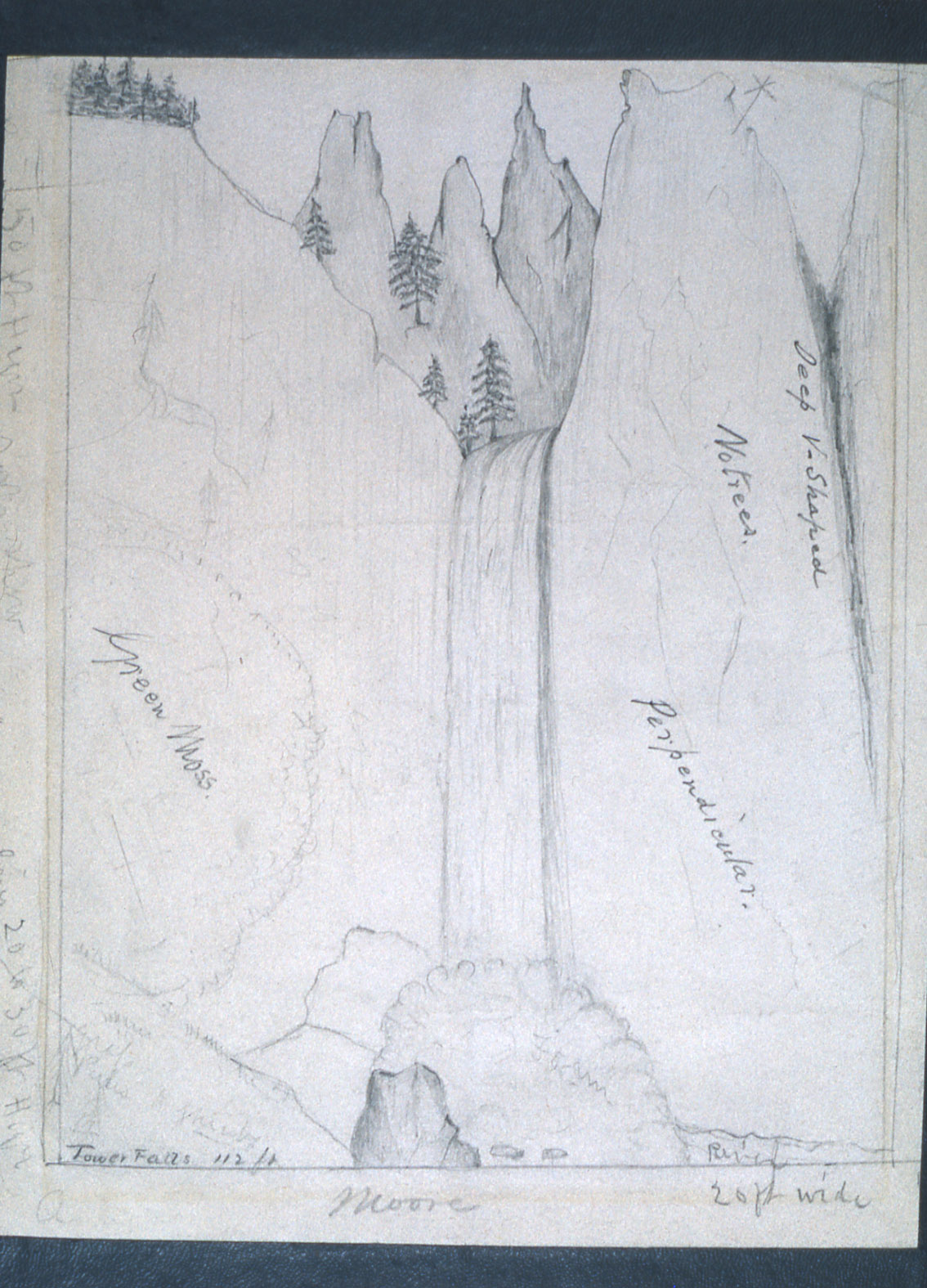
The great curiosity of the locality, however, is the Tower Fall of Hot Spring Creek, where that stream is precipitated, in one unbroken body, from an amygdaloid ledge, a sheer descent of 115 feet, into a deep gorge, joining the Yellowstone a few hundred yards below. ― Lt. Doane
Tower Fall. Sketched by Private Moore. The Yellowstone Expedition of 1870.
Lt. Doane's excellent journal writing often tempers his delight and exhilaration with the analytic detachment expected of his station, but of Tower Fall he waxes poetic:
Nothing can be more chastely beautiful than this lovely cascade, hidden away in the dim light of overshadowing rocks and woods, its very voice hushed to a low murmur, unheard at the distance of a few hundred yards. Thousands might pass by within a half mile and not dream of its existence; but once seen, it passes to the list of most pleasant memories. ― Lt. Doane

Popular