Showing posts with label Phytoplankton. Show all posts

Saturday, September 17, 2016

Ocean Color

"After sleeping through a hundred million centuries we have finally opened our eyes on a sumptuous planet, sparkling with color, bountiful with life. Within decades we must close our eyes again. Isn’t it a noble, an enlightened way of spending our brief time in the sun, to work at understanding the universe and how we have come to wake up in it?"
― Richard Dawkins

Pure water is colorless. The ocean gets its color from the absorption of color spectra and scattering of sunlight.

Bracing the Waves
by Ivan Aivazovsky, 1890

Romantic painter Ivan Aivazovsky (1817-1900) is recognized as one of the most accomplished seascape artists. Scenes depicting a range of ocean moods, like the sun, low on the horizon, illuminating the breaking wave in Bracing the Waves, constitutes the majority of his known work.

Water molecules are known to absorb proportionally more red, yellow, and green wavelengths, leaving the shades of blues and purples that Aivazovsky depicted in Among the Waves.

Among the Waves
by Ivan Aivazovsky, 1898

Suspended particles like sand or silt from coastal river runoff, will scatter sunlight as shown in the roiling shore break painted in Seascape with a Steamer.
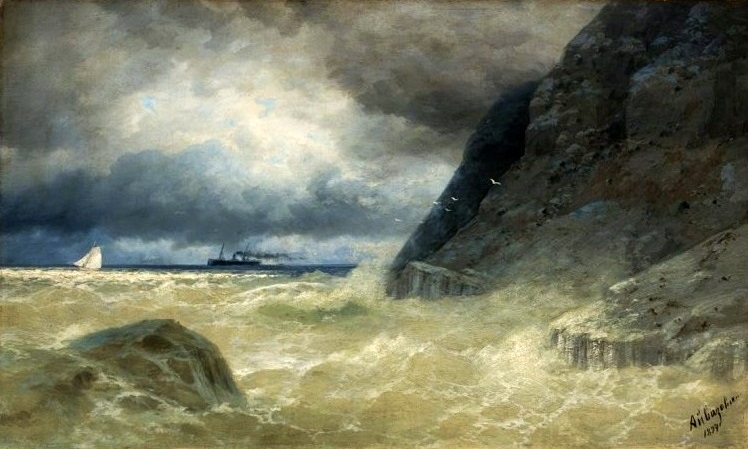
Seascape with a Steamer
by Ivan Aivazovsky, 1897

Suspended phytoplankton contains chlorophyll. Chlorophyll absorbs red and blue wavelengths giving the ocean a greener tint.
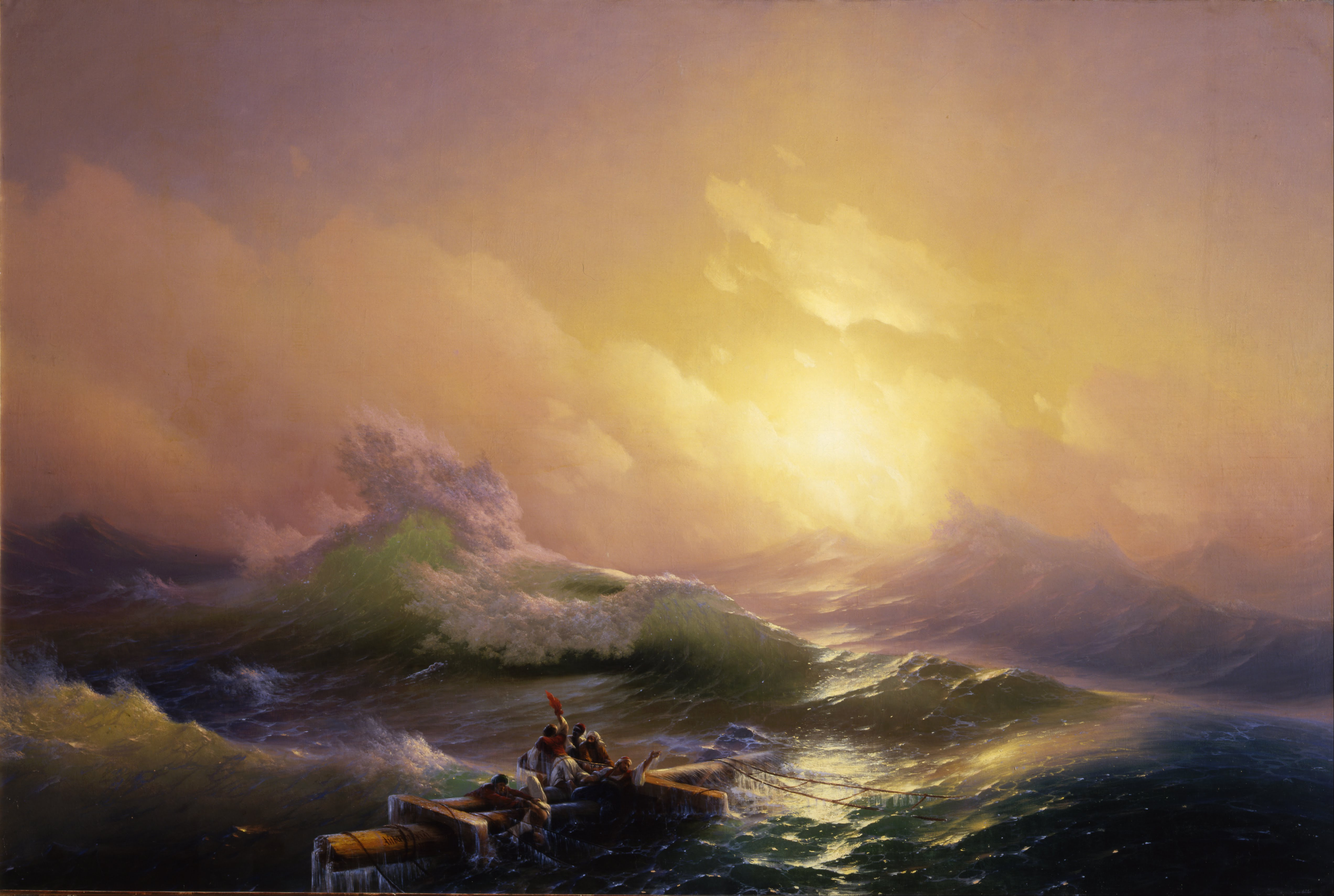
The Ninth Wave
by Ivan Aivazovsky, 1850


"When Rachel Carson accepted the National Book Award, she said, 'if there is poetry in my book about the sea it is not because I deliberately put it there but because no one could write truthfully about the sea and leave out poetry."
― Jim Lynch, The Highest Tide


REFERENCES

Saturday, March 12, 2016

Photosynthetic Phytoplankton

Most atmospheric oxygen comes from plant-life converting the Sun's energy into chemical energy via photosynthesis.
I cannot cause light; the most I can do is try to put myself in the path of its beam.
― Annie Dillard
Photosynthesis in aquatic plants like phytoplankton contributes roughtly 45% of atmospheric oxygen.
Phyto-
a botanical prefix derived from the Greek phyton meaning plant, flora, or vegetation.
Phytoplankton are single-celled, aquatic plants adrift and aplenty in the oceans, seas, and freshwater ecosystems. Phytoplankton are microscopic organisms that sustain aquatic animals like whales, shrimp, snails, and jellyfish.

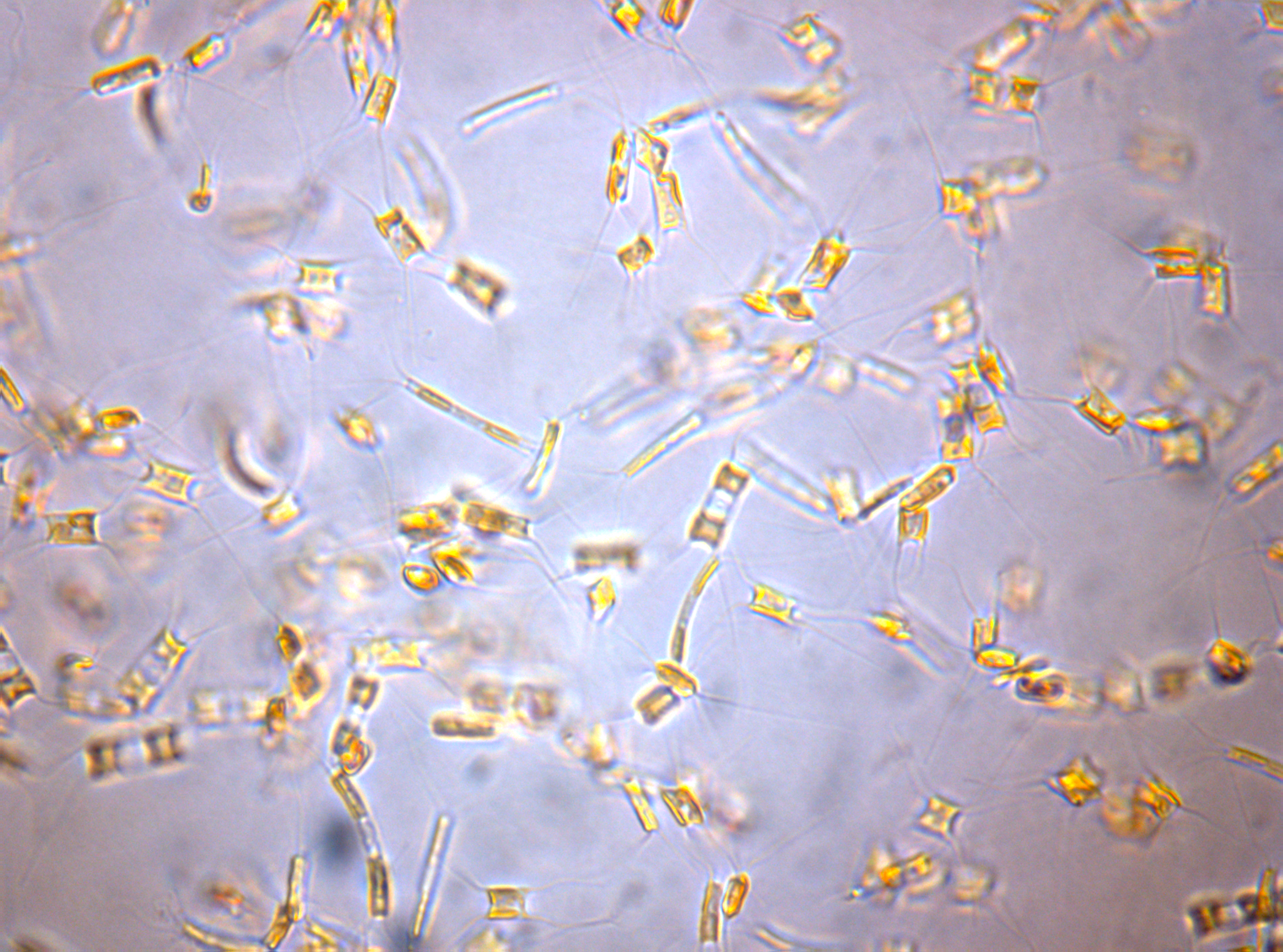
The diatom Attheya Longicornis at 400x magnification

The main classes of phytoplankton are diatoms and dinoflagellates. Diatoms often form ribbon-shaped colonies, but with no means of propulsion, are subject to the flow of currents.

Dinoflagellates are swimmers with whip-like flagella used to propel themselves.

Whip-like tail of a dinoflagellate

All phytoplankton convert the Sun's energy into sustenance via photosynthesis within the euphotic zone. The term euphotic comes from the Greek roots for well lit: εὖ "well" + φῶς "light".
Euphotic Zone
Sunlit water extending from the water's surface to a depth where the light intensity falls to 1% of that at the surface. 
Phytoplankton thrive where sunlight can penetrate and fuel their activity. About 90% of all marine life exists in the euphotic zone.
The oxygen in today's atmosphere is almost entirely the result of photosynthetic living, which had its start with the appearance of blue-green algae among the microorganisms.
— Lewis Thomas

REFERENCES

Saturday, November 17, 2012

Sea Foam

Sea foam, Asbury Park, NJ
Sea foam occurs when seawater containing high concentrations of dissolved organic matter is agitated by wind and wave action.

Offshore decomposition of phytoplankton blooms dissolves large amounts of organic matter in seawater. Dissolved organic matter acts as a foaming agent or surfactant.

Breaking waves in the near-shore surf zone trap air. The presence of foaming agents generates persistent bubbles that stick to each other by surface tension.

Sea foam can be blown inland by strong on-shore winds.
I am forever walking upon these shores,
Betwixt the sand and the foam,
The high tide will erase my foot prints,
And the wind will blow away the foam,
But the sea and the shore will remain forever.

— Kahlil Gibran (Sand and Foam)

Popular