Showing posts with label Entropy. Show all posts

Saturday, September 14, 2013

Playing to a Packed House

Kierkegaard advanced the idea that a person — not society, culture, or religion — is responsible for finding meaning in life and for living authentically, with passion and sincerity.
Life has its own hidden forces which you can only discover by living.
― Søren Kierkegaard 
Meaning begins and ends with consciousness. We sense and process while immersed in stimuli. We find our tribes and we make life-long connections.

We are here to notice each thing so each thing gets noticed. Together we notice not only each mountain shadow and each stone on the beach but, especially, we notice the beautiful faces and complex natures of each other. We are here to bring to consciousness the beauty and power that are around us and to praise the people who are here with us. We witness our generation and our times. We watch the weather. Otherwise, creation would be playing to an empty house.
― Annie Dillard
The summation of all consciousness is inestimable, if not infinite. If for nothing else but the will to live, the collective perceptions of all living organisms is a rapt audience. Nature, in the course of continuous unfolding, plays to a packed house.

Our home is the Earth. Our house is the universe.

According to the second law of thermodynamics, things fall apart. Structures disintegrate. Buckminster Fuller hinted at a reason we are here: By creating things, by thinking up new combinations, we counteract this flow of entropy. We make new structures, new wholeness, so the universe comes out even. A shepherd on a hilltop who looks at a mess of stars and thinks, ‘There’s a hunter, a plow, a fish,’ is making mental connections that have as much real force in the universe as the very fires in those stars themselves.
― Annie Dillard
Humans entertain the notion of counteracting the flow of entropy by creating things, by imposing temporary order, and by identifying and naming patterns in apparent replication and reoccurrence, but human purpose is disappointingly singular, like a mayfly hatch.

Consciousness is best not squandered. It ends in an instant.

REFERENCES

Saturday, March 2, 2013

Earth Time

Time reveals only one direction: toward the future.

By comparison space has few constraints. Gravity tethers us, yet we may jump. We may move in any direction in space, yet time moves irreversibly forward. While we may remember the past, we cannot not travel back in time.

Earth time is perceived as sequences of events.
"Time is what prevents everything from happening at once."
― John Archibald Wheeler
Snow Bank
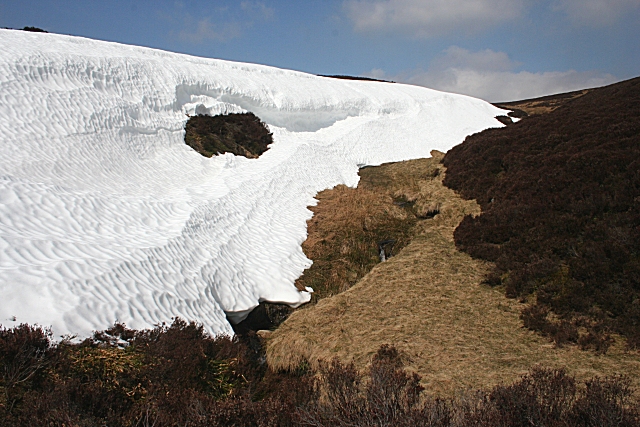
Consider Earth phenomena as frames on a filmstrip that, for example, record the decreasing size of a snow bank.

As individual frames, we might detect evidence of a phase change from ice to liquid by the glint of the sun reflected on water drops.

If the frames were sped up so they were experienced in animated succession, and if the temperature was above freezing, we might imagine sublimation (the phase transition from solid to gas) as the snow bank shrunk.
"Time isn't just a label on each instance of the world; it provides a sequence that puts the different instances in order."
― Sean Carroll
Many scientists have observed the remarkable phenomena of the irreversibleness of these events. Science conceived of entropy as a framework to understand the tendency of these events to progress in a way that cannot be reversed.

Astronomers, physicists, and cosmologists call this irreversibility The Arrow of Time. The arrow metaphor captures the idea that time flows in one direction. As time flows, empirical evidence indicates that energy dissipates or disintegrates from well-ordered (low entropy) to disorderly (high entropy).

Hemispherical Sundial
On earth we experience time as repetition: Sun up, sun down.
"The Earth spins on its axis, and it's going to do so 365.25 times every time the Earth moves around the sun."
― Sean Carroll
We experience repetitive seasons. Many of earth's processes occur over and over like the water cycle.

On, above, and below the surface of the Earth, water undergoes continuous change. The changes are explained by physical processes (evaporation, condensation, precipitation, infiltration, runoff, and subsurface flow and by phase changes (liquid, ice, and vapor).
"The key to measuring time is synchronized repetition ― a wide variety of processes occur over and over again, and the number of times that one process repeats itself while another process returns to its original state is reliably predictable."
― Sean Carroll
Time feels real to us. Our hearts pump rhythmic beats. We need time to frame perception and to order and make sense of the incoming data.
"Time is an illusion."
― Albert Einstein
It feels as if time flows. However illusory it is, we sense time as the present constantly updating itself like oncoming river water approaching a bridge. We sense the future as anticipated (and unanticipated) events. The future remains distinct until it becomes the present. We sense the past as fixed and immutable.

Sensing the flow of time, we carry the framework of fixed past, immediate present, and anticipated and unanticipated future along with us like a familiar backpack that structures our thoughts and behavior.
"As if you could kill time without injuring eternity."
― Henry David Thoreau

REFERENCES

Popular