Showing posts with label Arctic. Show all posts

Saturday, January 11, 2014

The Polar Vortex

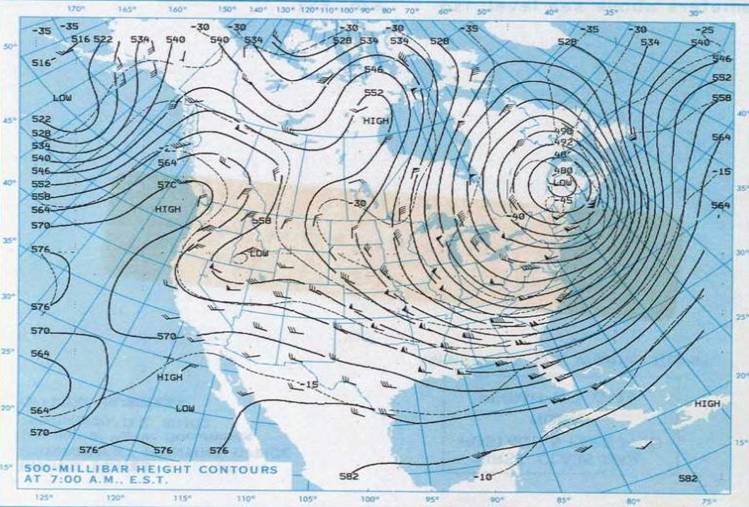
Polar Vortex over Maine, 1985
The polar vortex is circulation of upper-level, stratospheric winds that normally surround the North Pole. The circulating winds flow around a low-pressure system in a counterclockwise direction.

Occasionally this vortex becomes distorted so that it dips much farther south allowing lobes of arctic air to blanket parts of North America, northern Europe and Asia.

When the polar vortex is perturbed, temperatures tend to be colder in the mid-latitudes across the US, Europe, and Eurasia.
Perturbed Polar Vortex

The vortex typically lies directly over the North Pole and confines the cold air to the Arctic. Warm air masses pushing north will occasionally shift the polar vortex off the North Pole.

Normally circular, the vortex can become distorted and elongated, as shown in the animation, allowing arctic air to spill into the mid-latitudes.
"Men argue. Nature acts."
― Voltaire
Scientists have discovered a statistically significant link between Siberian snow cover and the behavior of the winter polar vortex.

AER scientists (Atmospheric and Environmental Research) use Siberian snow cover measured from the previous October to project the strength of the winter polar vortex. Using those projections, AER forecasts winter temperatures for much of North America and Northern Europe and Northern Eurasia.
“Three feet of ice does not result from one day of cold weather.”
― Chinese Proverb
The polar vortex of January 2014 could be a side effect of climate change. Climate scientists recognize that distortions of the jet stream cause extreme cold snaps in winter and anomalous heat waves in summer.

REFERENCES

Saturday, October 6, 2012

Polar Ice

Polar ice forms because as high latitude regions the poles receive less solar radiation than equatorial regions, resulting in lower temperatures.

Sea ice is frozen ocean water. Icebergs, glaciers, and ice shelves float in the ocean but originate on land. Sea ice cools the poles, but also moderates global climate.

Polar bears 280 miles from the North Pole
Polar bears 280 miles from the North Pole.
I seemed to vow to myself that some day I would go to the region of ice and snow and go on and on till I came to one of the poles of the earth, the end of the axis upon which this great round ball turns.
― Ernest Shackleton (1874 – 1922), Polar Explorer

Self-Perpetuating


Recently the Arctic has warmed twice as quickly as the rest of the northern hemisphere. Some aspects of changing climate is self-perpetuating.

Reflection / Absorption of Sea Ice
Sea Ice Reflection/Absorption in
Admiralty Bay, King George Island
Most sea ice is blanketed by reflective snow cover. About 80% of the sunlight striking snow-covered ice is reflected back into space.

Further, when soot from smokestacks in Europe and Asia migrate to the Arctic then settle onto the snow and ice, the darker particles absorb rather than reflect solar energy.

When sea ice melts, it exposes the darker, non-reflective ocean surface. Instead of reflecting solar energy, ocean water absorbs 90% of the incident solar radiation.

As ocean water warms, arctic temperatures rise.

Data

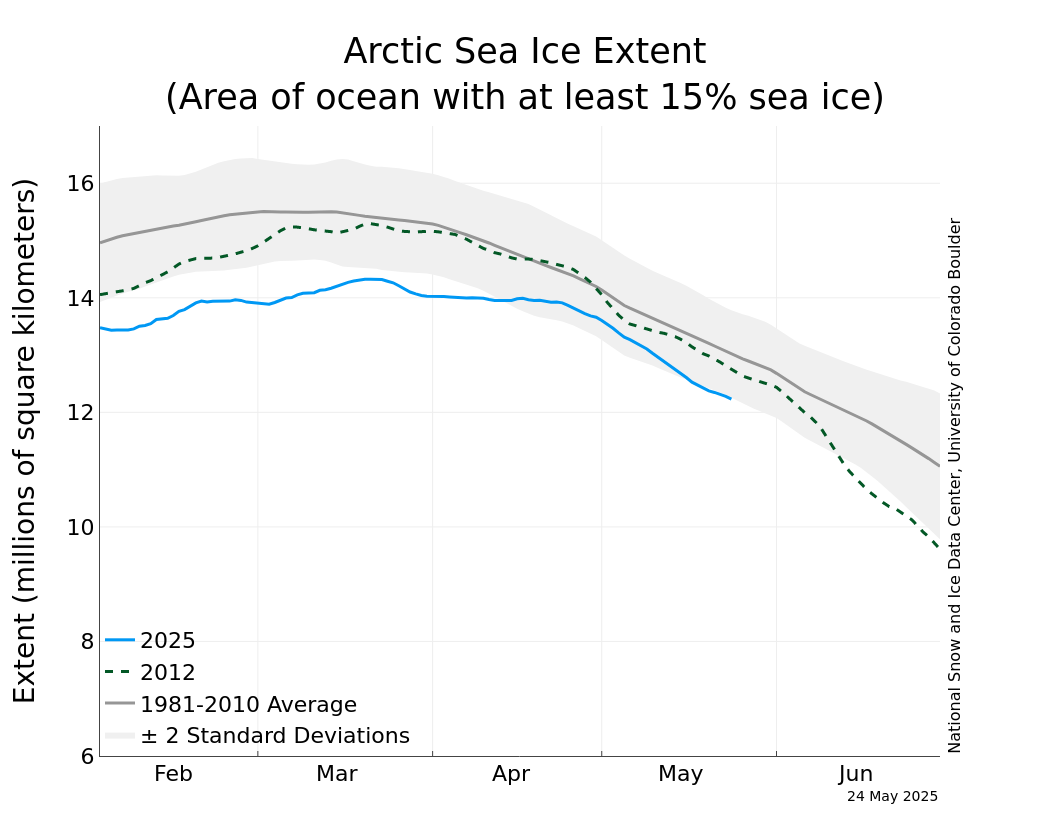
Sea ice data from the National Snow and Ice Data Center in Figure 1, indicate the mean monthly sea ice coverage has decreased between the years 1979 and 2012.

Figure 1.
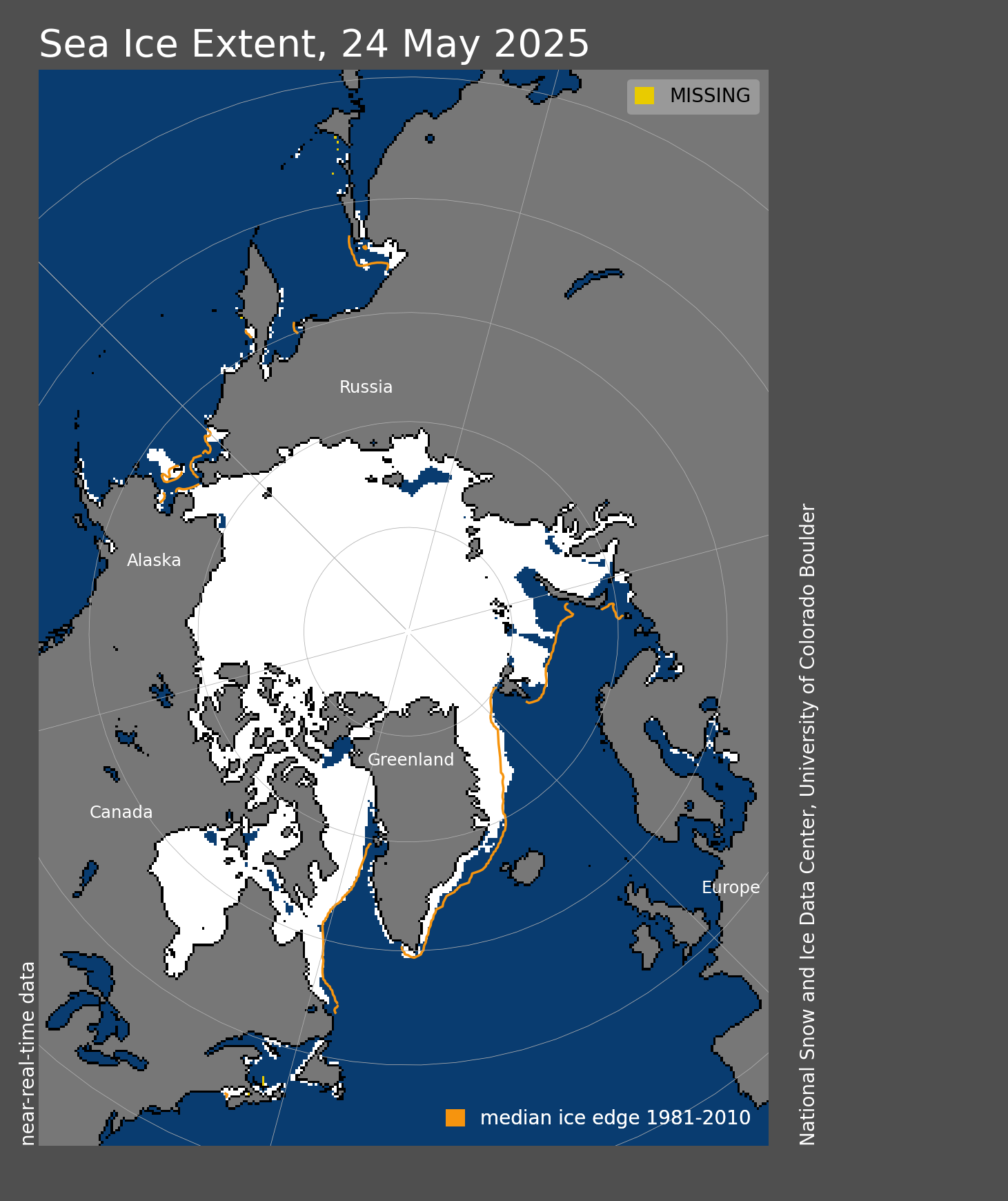
A plan view representation of sea ice extent is shown in Figure 2. The white region, representing the footprint of sea ice on October 2, 2012, is shown in comparison to the median footprint of sea ice during the period of 1979-2000 (orange outline).

Figure 2.
Science

Earth Scientists know from the geologic record that polar ice has changed over the last 12,000 years. Changes have occurred because of varied solar radiation and absorption. Further, on a geologic time scale, ice cover has grown or shrunk because of climate variation.

Sea ice is melting more dramatically each year. Scientists concur the melt is driven by climate change correlating to pollutants humans release into the atmosphere. A 2012 study of multi-decade sea ice variability concludes that 70 - 95% of the disappearance of Arctic ice since 1979 is due to human activity.

Within 10 years it will be impossible to travel to the North Pole by dog team. There will be too much open water.
― Will Steger

References

Popular