Showing posts with label Geophony. Show all posts

Saturday, July 4, 2015

Sound Tuning

Our nervous system relies on data collection organs dedicated to each sense. Humans seem most acquainted to the world through visual input. Sound, smell, taste, and touch sometimes require a greater allocation of our attention to appreciate what the non-visual senses add to the mosaic of perception.
Sound comes to us as sensory and perceptual events both sequential and ongoing. Distinguishing and appreciating sounds in nature is a matter of attention and practice.
― GrokEarth, Sound and Soundscape
Listening requires attuning to the specifics of the incoming data, distinguishing foreground and background, tuning to pitch and frequency, and experiencing sound in all its symphonic or cacophonic fullness.
In every sound, the hidden silence sleeps.
― Dejan Stojanovic
Nature Sound Map and Wild Sanctuary offer collections of natural sound samples ranging from bubbling mudpots to groaning icebergs, and whale sounds.

Bubbling Mudpot

A mudpot is an acidic hot spring in a geothermal area. The sound of mudpots comes from bubbling gases exiting the viscous slurry of mud. Artist's Paint Pots is geothermal area in Yellowstone with large mudpots. Listen to the sound of a mud pot and steam vent recorded in the Artist's Paint Pots:


Iceberg Sounds

Icebergs creak, squeal, and groan as they scrape against each other. The movements that generate the sounds are caused by shifting tides and small waves under the ice shelf. Listen to iceberg sounds recorded in Terre Adélie, Antarctica:


Whale Vocalization

Whales and other marine mammals depend on sound for communication. Whales vocalize to communicate because sight and smell are less effective in the ocean. Listen to humpback whale vocalizations recorded in the south Pacific ocean near the Tongan islands:


Biophonies and geophonies are the signature voices of the natural world, and as we hear them, we're endowed with a sense of place, the true story of the world we live in.
― Bernie Krause, TED talk

REFERENCES

Saturday, May 11, 2013

Sound and Soundscape

Listening is one way to attune to nature's rhythms.
There's music in the sighing of a reed;
There's music in the gushing of a rill;
There's music in all things, if men had ears;
The earth is but the music of the spheres.

― George Byron
Sound comes to us as sensory and perceptual events both sequential and ongoing. Distinguishing and appreciating sounds in nature is a matter of attention and practice.

Sound arrives to our ears as mechanical waves. Waves enter our ears to be translated by neural action. Air waves are transformed into perception. Psychoacoustics is a branch of science dedicated to understanding sound perception.

The brain works to locate sounds. The brain must also work to distinguish a particular sound from a sea of sounds. The range and origins of sounds in nature are varied and rich.

Soundscape

Soundscape is a term coined by composer R. Murray Schafer. It describes the elements and origins of the summation of perceived sound.

Soundscape ecology is a subfield of ecology that studies sounds in the landscape. A soundscape is considered as the sum of three contributing components:
  1. Biophony - sound generated by terrestrial and marine organisms;
  2. Geophony - sound generated by wind, rain, earth-movements, or other physical processes; and
  3. Anthrophony - sound generated by human activities.
Natural sounds have biological and non-biological origins. We imagine the vocalizations of birds, whales, or coyotes to be the summation of sounds in nature, but there are often under-appreciated, non-biological sources of sound such as:
  • lake ice cracking and popping as it expands and contracts;
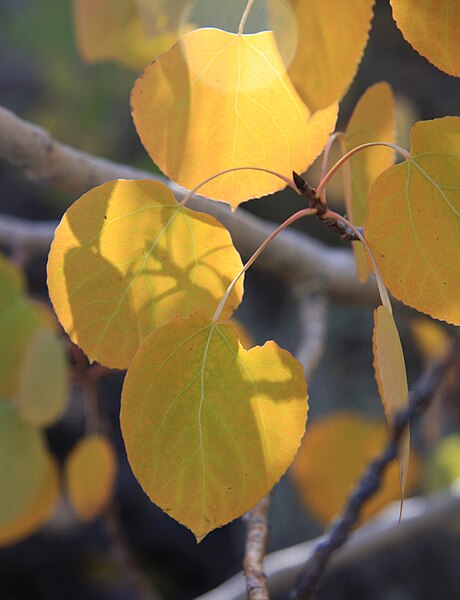
  • aspen leaves fluttering in the wind; or
  • ocean waves breaking on the shore.

Sound Appreciation

John Muir wrote extensively in his journals about the sound he experienced in the Yosemite Valley:
July 8. "All the Merced streams are wonderful singers, and Yosemite is the centre where the main tributaries meet...Sing on, Brave Tamarack Creek, fresh from your snowy fountains, plash and swirl and dance to your fate in the sea; bathing, cheering every living thing along your way."

Nevada Fall, a 600 ft. slanting descent. Merced Canyon, Yosemite

REFERENCES

Popular