Showing posts with label The Nature of Time. Show all posts

Saturday, June 27, 2015

Water Meditation

Civilization is recent and fleeting. Nature ― as far as we know ― is eternal. Water is fluid, clear, and shapeless.

Emerson used flowing water imagery and metaphors for water in his essays and poems. In the essay Nature, published in 1836, Emerson asks,
Who looks upon a river in a meditative hour and is not reminded of the flux of all things?
Water represents fluidity, transcendence, and spiritual insight. Water reminds us of the fickle and fleeting nature of how we perceive time.

Emerson encouraged independent thinking and imagination over convention. He reveled in the spiritual nature of natural phenomena.

Hyalite Creek

Appreciation for natural phenomena like the force of flowing water, the mechanics of an avalanche, the phases of the moon, or the life cycle of a mayfly invariably leads us to the vast infinity of poetry. 

Water
Ralph Waldo Emerson

The water understands
Civilization well;
It wets my foot, but prettily,
It chills my life, but wittily,
It is not disconcerted,
It is not broken-hearted:
Well used, it decketh joy,
Adorneth, doubleth joy:
Ill used, it will destroy,
In perfect time and measure
With a face of golden pleasure
Elegantly destroy.

REFERENCES
  • Nature, an essay by Ralph Waldo Emerson (1836), Wikipedia.

Saturday, September 21, 2013

Fall Meditation

Perception passes mostly unnoticed from the present into a carousel of snapshots in memory. The repetition of seasons, while predictable, predictably come to an end for every life.

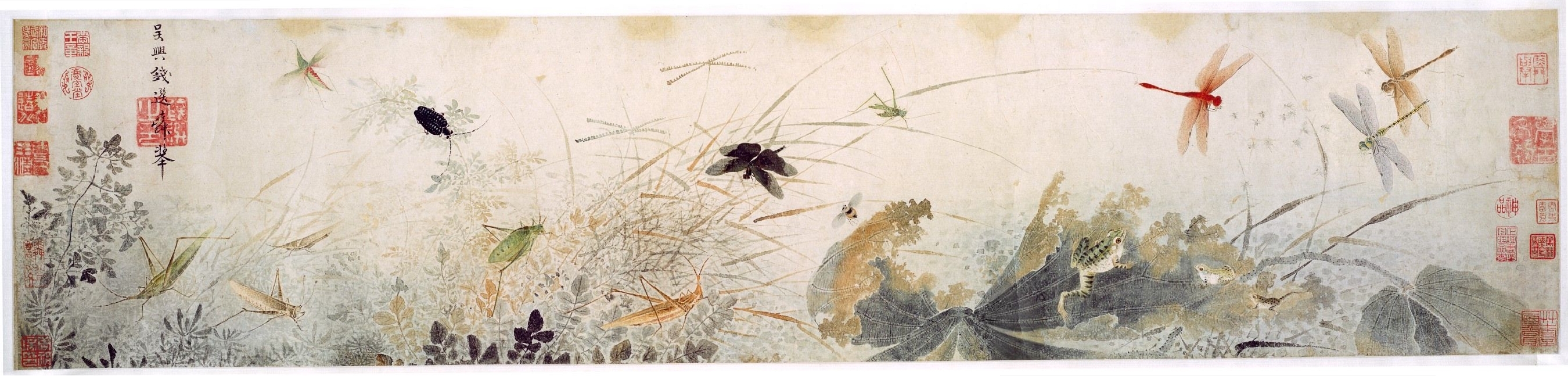
Early Autumn
Qián Xuǎn (钱选 /錢選), 13th Century, Ink on Paper

The imagery in Qián Xuǎn's drawing Early Autumn above, and the words in J.R.R. Tolkien's poem below, express a bittersweet recognition of the repetition and finality of living and the melancholic passage of time.

I sit beside the fire and think
Of all that I have seen
Of meadow flowers and butterflies
In summers that have been

Of yellow leaves and gossamer
In autumns that there were
With morning mist and silver sun
And wind upon my hair

I sit beside the fire and think
Of how the world will be
When winter comes without a spring
That I shall ever see

For still there are so many things
That I have never seen
In every wood in every spring
There is a different green

I sit beside the fire and think
Of people long ago
And people that will see a world
That I shall never know

But all the while I sit and think
Of times there were before
I listen for returning feet
And voices at the door


― J.R.R. Tolkien

Tolkien repeats the line, "I sit beside the fire and think" to mirror the repetition of the seasons. Then in the closing lines, deftly coaxes the reader to experience our senses by listening for returning feet.

Saturday, June 29, 2013

June of Every Calendar

In one full rotation of the earth, we observe the appearance and disappearance of sunlight. The diurnal cycle of the earth is one of many reoccurring patterns by which we experience time. We also experience time by witnessing seasonal changes and by observing life cycles.

Physicists and cosmologists have long puzzled over the nature of time.

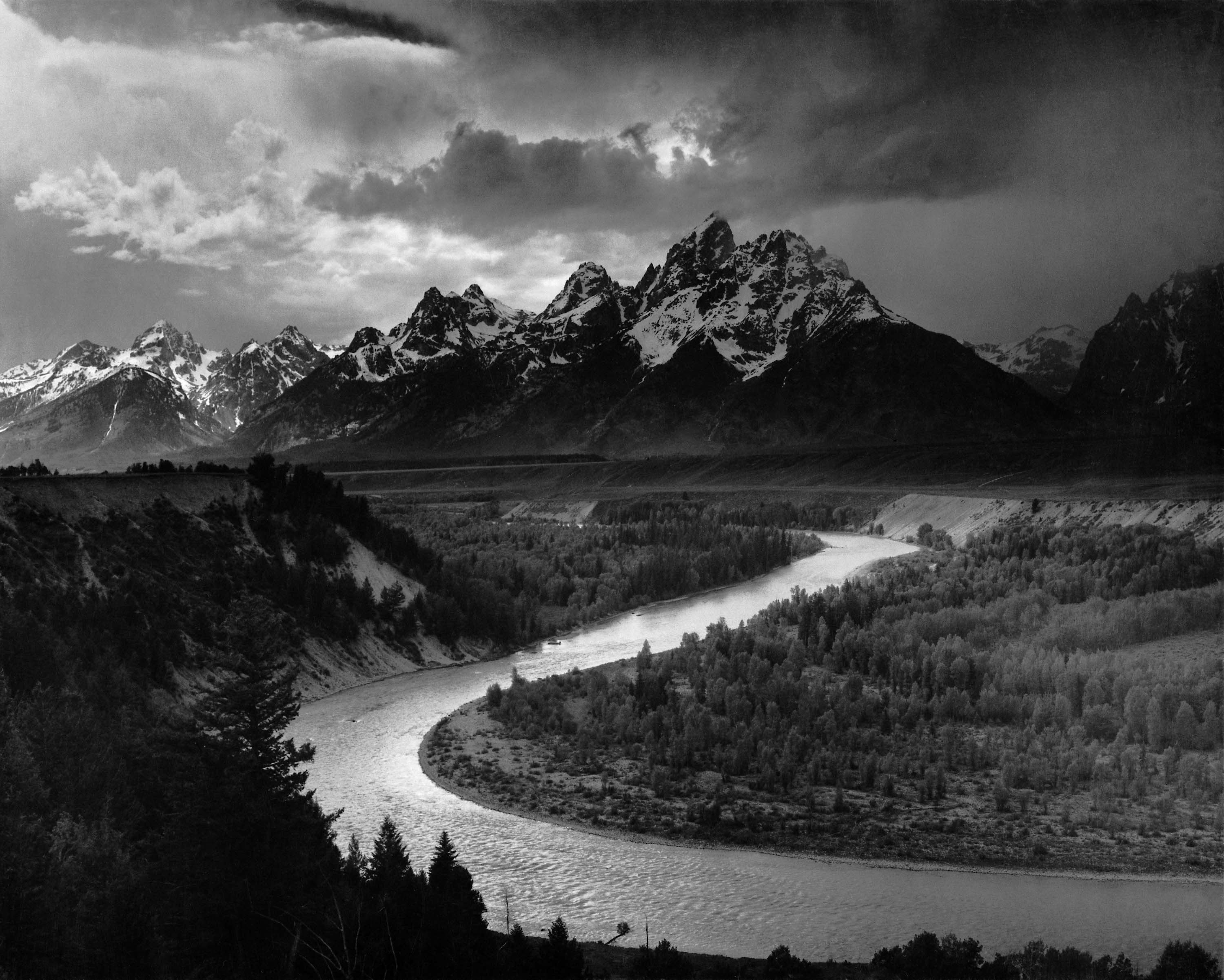
Turning the calendar page of June, I am struck by the artificiality of time. In Snake River Overlook, I write of Ansel Adams' photograph of the Snake River flowing south past the Tetons that it's the:
"June of every calendar"
The Tetons and the Snake River, 1942.
Ansel Adams, 1902 – 1984
The subject, quality of light, and composition of Adams' grand image strikes a universal chord. Like the predictable cycles of sunlight, or the predictable ticks of a metronome, Adam's dramatic image is memorable enough to become popular iconography.
“Green was the silence, wet was the light, the month of June trembled like a butterfly.” ― Pablo Neruda, 1904 – 1973.
Like clocks, calendars are a relatively recent invention that give us analogs to diurnal and seasonal events. We mark time by calendars. Calendars and clocks name and objectify what we can sense with less precision. Clocks and calendars allow us to attend to time and arrive at appointments at the appointed time.

Time is like months rendered in panels. Which panel is June? Is it the panel behind, the panel ahead, or both?

Pine Trees (ink on six folded screens)
Hasegawa Tōhaku, 1539 - 1610
Time is a voyage of moments. Moments are neither discrete or continuous. It is time that affords us the distance to mark milestones, but perhaps more urgently, it is time that gives us the space for discovery.
“The real voyage of discovery consists not in seeking new landscapes, but in having new eyes.” ― Marcel Proust

Popular