Showing posts with label Henry David Thoreau. Show all posts

Saturday, March 26, 2016

Everyman in Harmony

Early humans scavenged for subsistence. Two hundred thousand years ago, human subsistence meant collecting wild plants, mushrooms, and berries or pursuing wild animals.

Living in Harmony

Early humans, as low-impact hunter-gatherers, were as close to an ideal of living in harmony as ever.
The romantic contrast between modern industry that “destroys nature” and our ancestors who “lived in harmony with nature” is groundless. Long before the Industrial Revolution, Homo sapiens held the record among all organisms for driving the most plant and animal species to their extinctions. We have the dubious distinction of being the deadliest species in the annals of life.
― Yuval Noah Harari, Sapiens: A Brief History of Humankind
Since the first agricultural revolution around 10,000 BC, when humans began cultivating crops and domesticating wild species, we've become less harmonious and more destructive. And to what end?

The Search

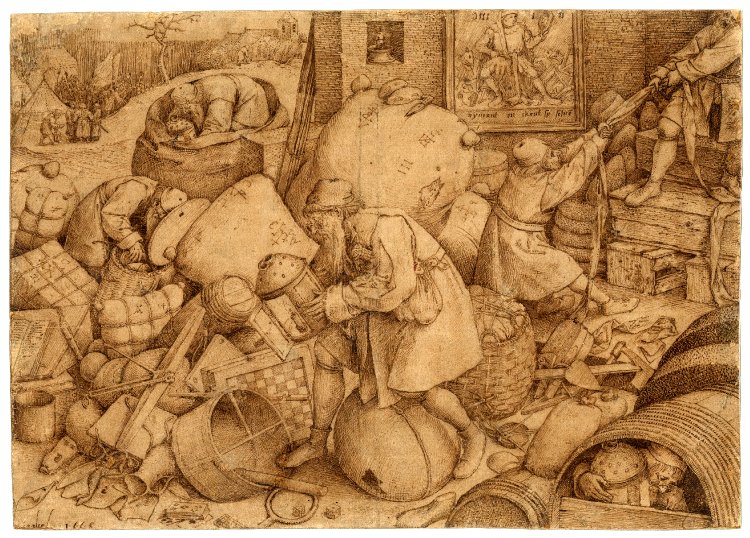
The most existentially poignant theme of Breugel's Everyman is the search for worldly goods and self-knowledge.
Everyman
Everyman, pen and brown ink
Pieter Bruegel, 1558

Bruegel depicts Elck (Everyman) in the center of his composition crowded by worldly goods, staring into an open lantern at a burning candle.

Everyman is in search of something (cf. Interpretation of Everyman). An inscription reads, Nobody knows himself. Another inscription below the image in a subsequent engraving made from Bruegel's drawing reads,
No one does not seek his own advantage everywhere, no one does not seek himself in all he does, no one does not look everywhere for private gain. This one pulls, that one pulls, all have the same love of possession.
A Conscious Endeavor

Bruegel's allegorical drawing depicts the dark side of the human condition, bequeathing an unflattering portrait of humanity.

Where does this leave us? We're left with the notion of mindful living. Thoreau called it a conscious endeavor.
We must learn to reawaken and keep ourselves awake, not by mechanical aids, but by an infinite expectation of the dawn, which does not forsake us in our soundest sleep. I know of no more encouraging fact than the unquestionable ability of man to elevate his life by conscious endeavor.
― Henry David Thoreau, Where I Lived, and what I Lived for
Mindful living is being awake, a heightening of the senses, and a conscious endeavor. When we're awake, we endeavor to make choices, rather than acting on impulse.
I tried to discover, in the rumor of forests and waves, words that other men could not hear, and I pricked up my ears to listen to the revelation of their harmony.
― Gustave Flaubert, November

REFERENCES

Saturday, August 9, 2014

The Tonic of Wildness

Thoreau wrote that humans need the tonic of wildness.

Few natural events are wilder than a series of tropical storms bearing down on the Hawaiian Islands.

Floating in the midst of the first tropical storm to hit Hawaii in 22 years is a low-riding, autonomous ocean robot broadcasting data.

Holoholo is an robot that autonomously sends pictures and weather data while at sea.

Holoholo is called a wave glider. It is a robot powered by waves and solar panels. It has sensors that measure water temperature, wind speed, water pressure, and wind direction. Using an onboard internet connection, Holoholo sends data to the world.
"The Wave Glider SV3 is the world’s first hybrid wave and solar propelled unmanned ocean robot."
― Liquid Robotics
“My soul is full of longing
for the secret of the sea,
and the heart of the great ocean
sends a thrilling pulse through me.”

― Henry Wadsworth Longfellow

“So fine was the morning except for a streak of wind here and there that the sea and sky looked all one fabric, as if sails were stuck high up in the sky, or the clouds had dropped down into the sea.”
― Virginia Woolf, To the Lighthouse

“We need the tonic of wildness...At the same time that we are earnest to explore and learn all things, we require that all things be mysterious and unexplorable, that land and sea be indefinitely wild, unsurveyed and unfathomed by us because unfathomable. We can never have enough of nature.”
― Henry David Thoreau, Walden: Or, Life in the Woods

If not a tonic, the autonomous data from Holoholo affords the vicarious sensations of wildness.

REFERENCES

Saturday, July 26, 2014

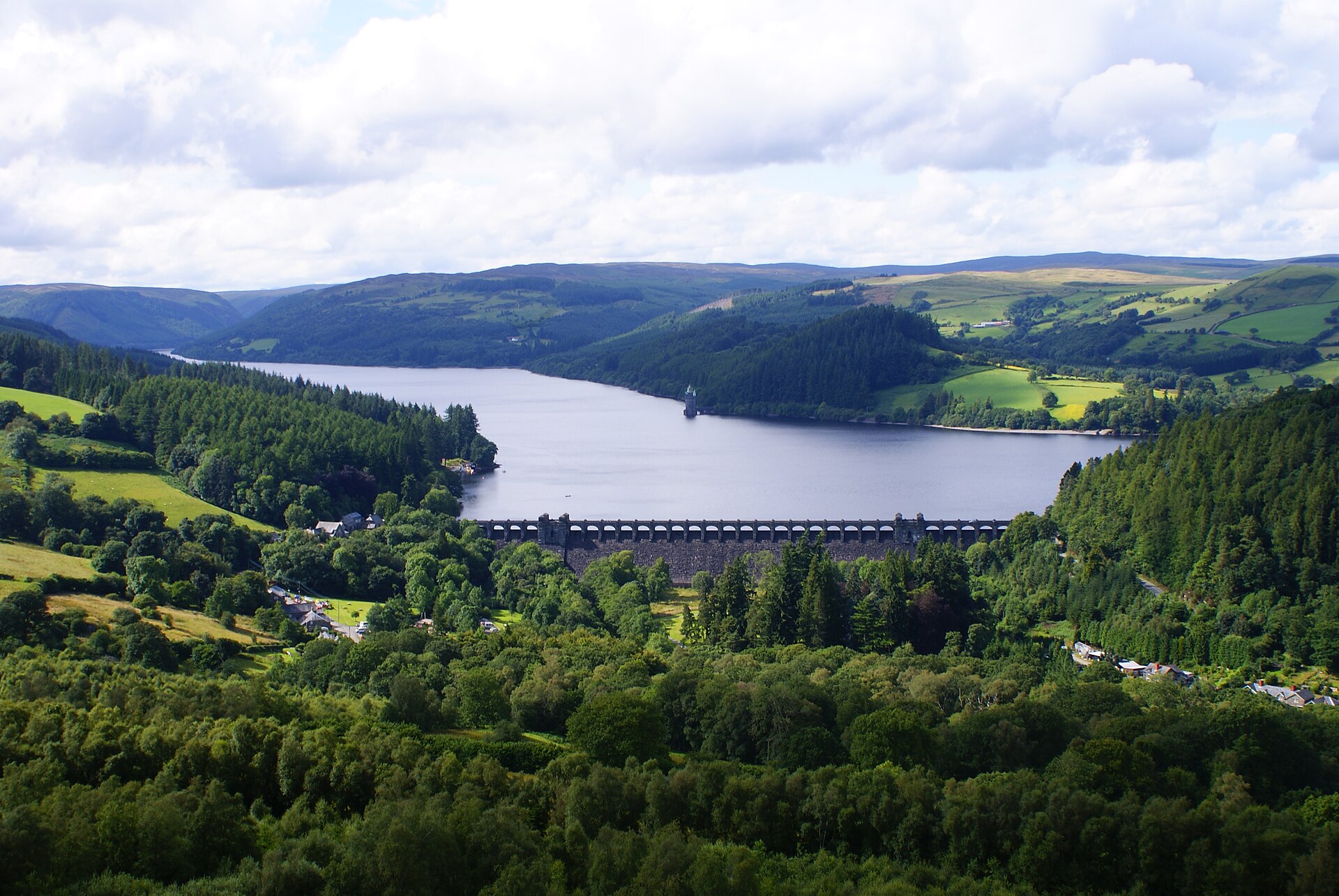
Water Reservoir

Reservoirs store water in reserve for our consumption.

Natural or anthropogenic lakes, storage ponds, or impoundments from damming are used as water reserves.
“We never know the worth of water till the well is dry.”
― Thomas Fuller (1608-1661)
The word reservoir is from the French réservoir meaning storehouse.

Essential for Life

Water is essential for life on Earth. Water is a constituent of the fluids in all living organisms.
“Life in us is like the water in a river.”
― Henry David Thoreau
Water is abundant in parts of the world, yet more than 1.1 billion humans have no potable water. Fresh water reserves are unevenly distributed around the world.
"We are living on the planet as if we have another one to go to.”
― Terri Swearingen
Reservoirs in the Universe
Golden rings of star formation

Water is produced as a byproduct of star formation.

The components of water molecules, hydrogen and oxygen, are among the most abundant elements found in the universe.

Astronomers have detected evidence of water on the Moon, Mars, Jupiter's moons, and in comets.

Water has also been detected in interstellar clouds in the Milky Way. It is hypothesized that water exists in abundance in galaxies beyond the Milky Way. A massive cloud of water vapor has been observed feeding a black hole in a galaxy 12 billion light-years away.

Exoplanets have been confirmed to hold water. Despite these findings, detecting the presence of water on planets outside our solar system might be rarer than previously assumed (cf., Hunt for Water on Earth-like Exoplanets More Challenging Than Previously Thought).

Yin and Yang

Opposing phenomena like abundance and scarcity seem strangely interconnected in nature. Although counter-intuitive the abundance and scarcity of water seems more inter-related than contrarian.
“Water is the driving force in nature.”
― Leonardo da Vinci
Like yin and yang in Chinese philosophy, the abundance and scarcity of water seems to be complementary facets of an integrated phenomena we have yet to comprehend.

REFERENCES

Saturday, July 12, 2014

Supermoon

Supermoons occur tonight July 12th, and again on August 10th and September 10th of 2014.

Show Don't Tell

Oft quoted writing advice from Anton Chekhov to his brother has been paraphrased as:
“Don't tell me the moon is shining; show me the glint of light on broken glass.”
Chekhov advised his brother, an aspiring writer, to "show, don't tell" which has become a guiding principle of writing. Show don't tell might be extended to scientific phenomena like the supermoon.

Elliptical Orbit

The moon orbits the earth in an elliptical path. Unlike a hypothetical circular path where the moon would always be equidistant from the earth, the moon's elliptical path means the distance between the earth and the moon varies over an orbital cycle.

The supermoon, or a full moon at perigee, is a phenomenon that occurs when the moon's orbital path transports it to its closest point to the Earth. The terms perigee and apogee describe the shortest and longest distance between the earth and the moon.

Full Moon at Perigee

A full moon at perigee would, by comparison, appear about 12-14% larger than the full moon at apogee because it is closer. If you held a ball at arm's length then brought it to your nose, the same ball would appear larger. Similarly, the full moon at perigee might appear larger, but only if we have a reference to compare it to ― like side-by-side images of full moons at perigee and apogee.
It's not what you look at that matters, it's what you see.
― Henry David Thoreau

Apparent Size Difference by Observers of the Full Moon at Perigee and Apogee

Super Moons and Natural Disasters

The moon has less gravitational pull when it is at apogee (farthest from earth) than when it is at perigee (closest to earth). The gravitational pull of the moon influences tides. The stronger gravitational pull of a moon at perigee leads to higher variation in the high and low tide levels.

Despite these gravitational variations, science hasn't established a definitive correlation between a full moon at perigee and its attendant gravitational pull, and the occurrence of natural disasters like earthquakes, floods, and volcanic eruptions.
"I think you'd be hard pressed to see a difference in tectonic activity during different lunar phases."
― William Burton, USGS Research Geologist
Lunar phases seem to have no discernible influence on seismic activity, weather patterns, or volcanic activity.
"This idea of blaming natural disasters on the phases of the moon goes way back to the Greeks. It has been around for hundreds and hundreds of years."
― Malcom Johnston, USGS Scientist Emeritus

Nearly Full Moon at Perigee
image by Cindy Gipple
Three things cannot be long hidden: the sun, the moon, and the truth.
― Guatama Buddha

REFERENCES

Saturday, April 19, 2014

Life and Beauty

Three questions motivate astrobiologists:
  • What is life?
  • How did life begin and evolve on Earth? and
  • Does life exist elsewhere in the universe?
Science understands surprisingly little about the first question, and the answer seems likely to remain elusive. Astrobiologists continue to pursue the discovery of extraterrestrial life by sending probes to Mars and other planets. So far we only know only of life on Earth.

Science knows a lot about life on Earth, but questions remain unanswered. There are enticing clues that suggest when and how life began on Earth. To the best of our knowledge life began about 4 billion years ago with humans, the latecomers, appearing as recently as a couple of hundred thousand years ago (cf. Cosmic Newcomers).

There is plenty of evidence of life adapting at the molecular level. The shared DNA of all living things, and the coexistence of identical segments of DNA code across species, makes a compelling narrative for a life force that has been replicating and adapting for billions of years.
Shall I not have intelligence with the earth? Am I not partly leaves and vegetable mould myself.
— Henry David Thoreau
What is the role of sensory attraction in the adaptation and evolution of living things?
"How did these organs of plant sex manage to get themselves cross-wired with human ideas of value and status and Eros? And what might our ancient attraction for flowers have to teach us about the deeper mysteries of beauty - what one poet has called "this grace wholly gratuitous"? Is that what it is? Or does beauty have a purpose?"
— Michael Pollan from The Botany of Desire: A Plant's-Eye View of the World
In Botany of Desire Michael Pollan examines the properties of sweetness, beauty, intoxication, and control and the role they each property played in the codependent evolution of apples (sweetness), tulips (beauty), cannabis (intoxication), and potatoes (cultivatable control).

Pollan asks, "Does beauty have a purpose?" When viewed as the result of accidents of nature, beauty seems to be attained, or converged upon, through incremental change. What constitutes or defines beauty seems free to evolve along with changing desires of the species.
"Design in nature is but a concatenation of accidents, culled by natural selection until the result is so beautiful or effective as to seem a miracle of purpose."
— Michael Pollan from The Botany of Desire: A Plant's-Eye View of the World
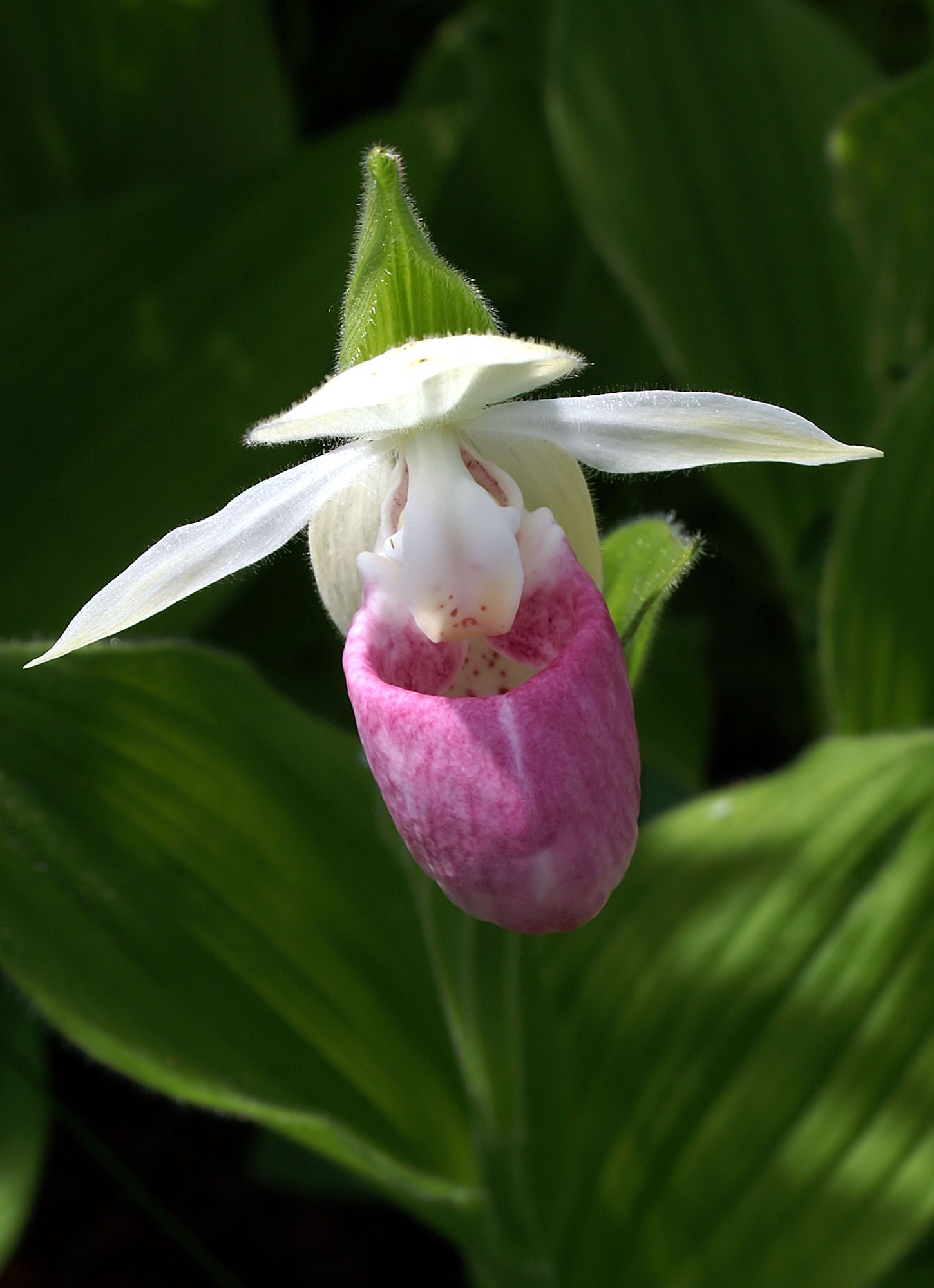
Cypripedium reginae
Pink Lady's Slipper
Cypripedium calceolus
Yellow Lady's Slipper
REFERENCES

Saturday, October 5, 2013

A Nascent Island

BeforeAfter
Satellite images from Earth Observing-1
A new island composed of mounded sediment recently emerged off the coast of Pakistan.

It was created by a mud dome following a powerful 7.8 magnitude earthquake.

Mud domes occur when liquids, gases, and solid materials are geo-excreted due to the jostling of seismic activity. The occurrence of mud domes correlate to a subduction zone like the Makran Trench, where tectonic plates boundaries like the Eurasian plate and Arabian plate converge.
"Our knowledge is a little island in a great ocean of non-knowledge."
― Isaac Bashevis Singer
The 7.8 magnitude earthquake is believed to have loosened sediment above a cache of subsurface natural gas allowing un-trapped gas to rise. The rising gas transported mud, rock, and sand upward to create the dome that is visible today.


Perhaps wind and wave erosion will eventually cause the island to disappear beneath into the sea. For now, the island is about 100 yards in diameter and rises 65 feet above the sea.
"You must live in the present, launch yourself on every wave, find your eternity in each moment. Fools stand on their island opportunities and look toward another land. There is no other land, there is no other life but this."
― Henry David Thoreau

REFERENCES


Saturday, July 27, 2013

Seasonal Change

Mississippi River near Lock & Dam #1
Early Autumn / Early Spring
Mississippi River, north
of Lock and Dam No. 1
Seasons are distinguished by changes in weather, ecology, and hours of daylight. What accounts for seasonal changes?
“One must maintain a little bit of summer, even in the middle of winter.” ― Henry David Thoreau
A common misconception is that seasons occur because of differences in the distance between the Earth and the Sun throughout the year.

Seasons are not caused by variations in distance between the Earth and the Sun. The variation is distance between the Earth and the Sun is relatively small.

The perihelion, when the Earth is closest to the sun (94,445,000 miles), occurs around January 4th (position 1, left).

The aphelion, when the Earth is furthest from the sun (94,555,000 miles), occurs around July 3rd (position 2, left).

A number of years ago, the documentary “A Private Universe,” about how we misperceive the world around us, was filmed at Harvard’s commencement. Twenty-three faculty members, alumni and graduating seniors were asked, “Why is it warm in the summer and cold in the winter?” All but two answered incorrectly, saying the Earth was closer to the sun in the summer than in the winter (it’s actually closer in January). ― John Edward Huth
Four Seasons

The four seasons of the year are caused by variations is sunlight due to the 23.5° tilt of Earth's axis.

When summer occurs in a hemisphere, it is receiving more direct sunlight than the opposite hemisphere where it is winter.

In winter, sunlight hits the earth at oblique angles so it is less concentrated.

Seasonal changes become more pronounced as our absolute latitude increases (i.e., as we move farther from the equator).

In the northern hemisphere, summer is warmer than winter because sunlight hits the Earth at a more direct angle. Summer days in the northern hemisphere are much longer than the nights.

Much of our literature has been written with a northern hemisphere bias:
“What good is the warmth of summer, without the cold of winter to give it sweetness.”
― John Steinbeck, Travels with Charley: In Search of America
The carousel-like change experienced traveling on what Buckminster Fuller popularized as Spaceship Earth, is captured in Joni Mitchell's song The Circle Game:
And the seasons they go 'round and 'round
And the painted ponies go up and down
We're captive on the carousel of time
We can't return we can only look behind
From where we came
And go round and round and round
In the circle game

REFERENCES

Saturday, March 2, 2013

Earth Time

Time reveals only one direction: toward the future.

By comparison space has few constraints. Gravity tethers us, yet we may jump. We may move in any direction in space, yet time moves irreversibly forward. While we may remember the past, we cannot not travel back in time.

Earth time is perceived as sequences of events.
"Time is what prevents everything from happening at once."
― John Archibald Wheeler
Snow Bank
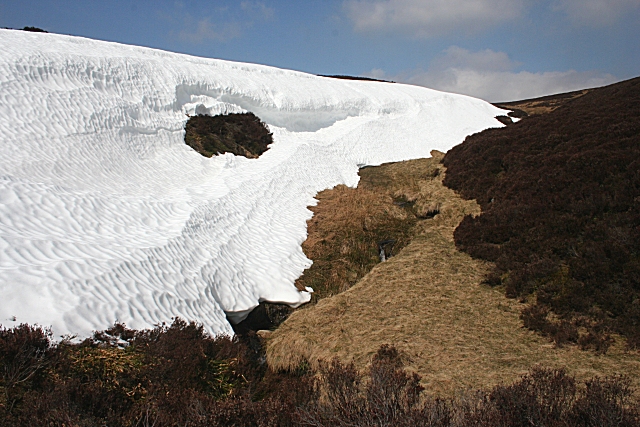
Consider Earth phenomena as frames on a filmstrip that, for example, record the decreasing size of a snow bank.

As individual frames, we might detect evidence of a phase change from ice to liquid by the glint of the sun reflected on water drops.

If the frames were sped up so they were experienced in animated succession, and if the temperature was above freezing, we might imagine sublimation (the phase transition from solid to gas) as the snow bank shrunk.
"Time isn't just a label on each instance of the world; it provides a sequence that puts the different instances in order."
― Sean Carroll
Many scientists have observed the remarkable phenomena of the irreversibleness of these events. Science conceived of entropy as a framework to understand the tendency of these events to progress in a way that cannot be reversed.

Astronomers, physicists, and cosmologists call this irreversibility The Arrow of Time. The arrow metaphor captures the idea that time flows in one direction. As time flows, empirical evidence indicates that energy dissipates or disintegrates from well-ordered (low entropy) to disorderly (high entropy).

Hemispherical Sundial
On earth we experience time as repetition: Sun up, sun down.
"The Earth spins on its axis, and it's going to do so 365.25 times every time the Earth moves around the sun."
― Sean Carroll
We experience repetitive seasons. Many of earth's processes occur over and over like the water cycle.

On, above, and below the surface of the Earth, water undergoes continuous change. The changes are explained by physical processes (evaporation, condensation, precipitation, infiltration, runoff, and subsurface flow and by phase changes (liquid, ice, and vapor).
"The key to measuring time is synchronized repetition ― a wide variety of processes occur over and over again, and the number of times that one process repeats itself while another process returns to its original state is reliably predictable."
― Sean Carroll
Time feels real to us. Our hearts pump rhythmic beats. We need time to frame perception and to order and make sense of the incoming data.
"Time is an illusion."
― Albert Einstein
It feels as if time flows. However illusory it is, we sense time as the present constantly updating itself like oncoming river water approaching a bridge. We sense the future as anticipated (and unanticipated) events. The future remains distinct until it becomes the present. We sense the past as fixed and immutable.

Sensing the flow of time, we carry the framework of fixed past, immediate present, and anticipated and unanticipated future along with us like a familiar backpack that structures our thoughts and behavior.
"As if you could kill time without injuring eternity."
― Henry David Thoreau

REFERENCES

Saturday, December 8, 2012

A Snowflake's Journey

Snowflakes by Wilson Bentley
photographed in 1902.
If patterns in clouds are the sky's narrative documentary, then snowflakes are the sky's mystery because of the infinite patterns they assume.

Clouds and snowflakes are manifestations of the different phases of water. Snowflakes begin as water vapor in clouds, but they are not frozen raindrops. They are, in their simplest form, hexagonal prisms that can branch and sprout into intricate patterns.

Snowflakes come about when the water vapor in clouds condenses directly into ice.
How full of the creative genius is the air in which these are generated! I should hardly admire more if real stars fell and lodged on my coat.
— Henry David Thoreau

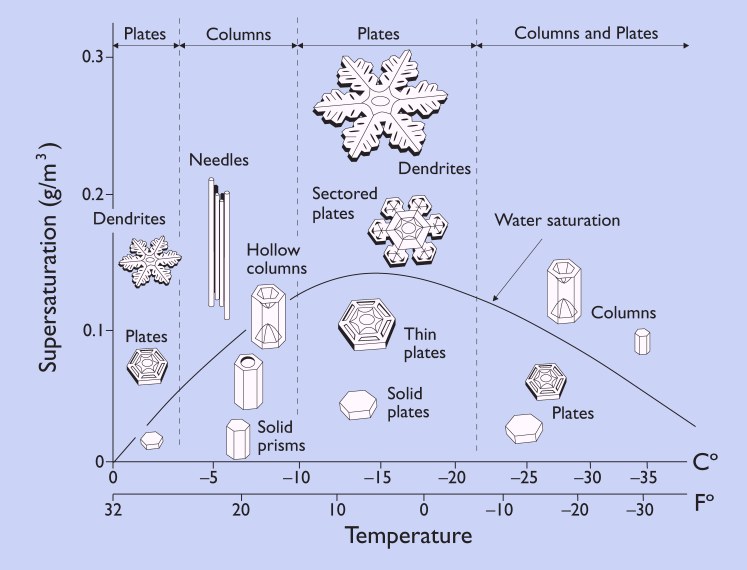
The pattern a snowflake assumes varies under different conditions. Libbrecht's Snowflake Morphology diagram illustrates how a snowflake's general shape and size is a function of temperature and humidity (supersaturation).

Snowflake Morphology by Kenneth G. Libbrecht
"Why snow crystal shapes change so much with temperature remains something of a scientific mystery. The growth depends on exactly how water vapor molecules are incorporated into the growing ice crystal, and the physics behind this is complex and not well understood."
— Kenneth G. Libbrecht

Snowflakes participate in a cyclical journey. From water vapor in clouds, snowflakes assume shapes made possible by a vast combinatorial spectrum of conditions. Despite apparent uniqueness, each snowflake follows the same gravity-driven journey to the earth.

Snowflakes come to temporary rest on the earth's surface. Eventually a snowflake becomes melt water that joins a river that wends its way to the ocean which, in turn, ascends back to the clouds.

One might parallel a snowflake's journey with that of a person's, although perhaps a person's destination is less clear. I wonder if like the snowflake, the human journey has no destination. Perhaps it too is cyclical.
I will lose the habit of stars in the heavens, as frozen water loses the habit of snowflakes. I will take my frozen body, and give it to the young goats that they might graze it.
― Nichita Stănescu (1933-1983), Romanian poet and essayist

REFERENCES

Saturday, September 29, 2012

Estuary Meditation

Estuaries are places where rivers meet the ocean ― bays, harbors, lagoons, salt marshes, tidal inlets, barrier islands, and sounds.

The estuary is a transition ecosystem between rivers and ocean ― a zone influenced by marine phenomena like tides, waves, and the influx of salt water and riverine phenomena like fresh water flows and sediment transport.

Conceptual Diagram of an Estuary.
Source: Louisiana Universities Marine Consortium (LUMCON)

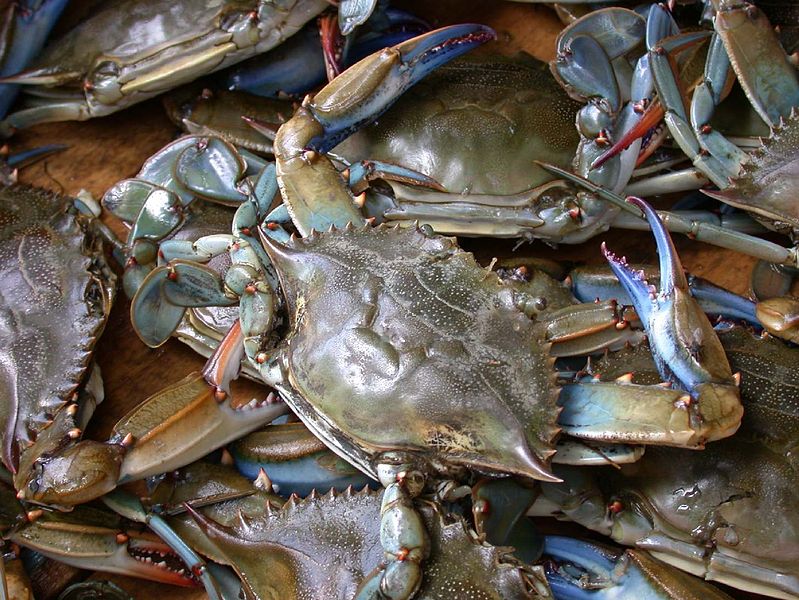
Blue Crab
Estuaries are among the most productive micro-environments on earth with more organic matter created annually than comparably-sized forests, grasslands, or cultivated land.

Sheltered estuarine waters support thriving communities of plants and animals especially adapted for this ecosystem.

To stand at the edge of the sea, to sense the ebb and flow of the tides, to feel the breath of a mist moving over a great salt marsh, to watch the flight of shore birds that have swept up and down the surf lines of the continents for untold thousands of year, to see the running of the old eels and the young shad to the sea, is to have knowledge of things that are as nearly eternal as any earthly life can be.
― Rachel Carson

Estuary of Klamath River in Redwood National Park.

The nutrient cycle, the water cycle, and the cycle of life are the primary physical and biological phenomena found in estuaries:
  • Nutrient Cycle - Many elements are recycled in estuaries providing sustenance to living organisms. The health of an estuary depends on a balance of these elements.
  • Water Cycle - Evaporation occurs in estuaries and fresh water recharges ground water reserves.
  • Cycle of Life - Estuaries provide food, shelter, and nurseries for animals. Decomposing animals provide nutrients for other organisms.

We need the tonic of wildness, to wade sometimes in marshes where the bittern and the meadow-hen lurk, and hear the booming of the snipe; to smell the whispering sedge where only some wilder and more solitary fowl builds her nest, and the mink crawls with its belly close to the ground.
― Henry David Thoreau

National Estuaries Day is an annual observation in the US held on the last Saturday of September.

Saturday, June 9, 2012

Planetary Life Raft

Biosphere
For every year I live, I ease my criteria for what constitutes the natural world. My criteria for naturalness has softened.

At age twenty, the bar of naturalness was set by the ever-elusive absence of human trace – no human structures, sights, smells, or discarded Ding Dong wrappers.

Yes, humans are an untidy species.

Michael Pollan reminds us of our unwavering codependency on flora and fauna. Other animals and flowers have changed us. We, in turn, have changed them.
It has become much harder in the past century to tell where the garden leaves off and pure nature begins.
― Michael Pollan
In The Botany of Desire Pollan explores the co-evolution of humans with four plants — apples, tulips, marijuana, and potatoes — from the perspective of both plant and human.

Co-evolution is the notion that change in one biological object is triggered by change in a related object. I wonder about the frequency of triggering events over the course of a human lifetime. Do they occur unbeknownst to us?
Shall I not have intelligence with the earth? Am I not partly leaves and vegetable mould myself.
― Henry David Thoreau
Like other fauna and flora, humans have built-in drives, if not self-obsessed desires. Each species, animal or plant, is hell-bent on thriving in a dynamic biosphere where change is rapid, slow, and sometimes cataclysmic. To thrive we take advantage of ― and co-depend on ― other species, as they do on us.

Earth's Biosphere

How do we reckon this thin raft of life on earth? The biosphere is,
The place on Earth's surface where life dwells.
― Eduard Suess, Geologist, 1875.
Cloud Tracks
The biosphere is the sum of all ecosystems. This life raft is thin compared to a planetary scale, or the distance between the earth and the moon.

Earth's biosphere consists of all living beings and their relationships. The life-giving relationships of "earthlings" include critical interaction with the elements of the lithosphere, hydrosphere and atmosphere.

By humanity's best reckoning, earth's biosphere evolved beginning through biogenesis or abiogenesis some 3.5 billion years ago. Abiogenesis describes the so-called primordial soup. That is,
the study of how biological life could arise from inorganic matter.
No less poetic, biogenesis is
the generation of life from existing life.
In Operating Manual for Spaceship Earth, Buckminster Fuller observed that
Our little Spaceship Earth is only eight thousand miles in diameter, which is almost a negligible dimension in the great vastness of space. . . Spaceship Earth was so extraordinarily well invented and designed that to our knowledge humans have been on board it for two million years not even knowing that they were on board a ship.
Naturalness

Indeed my criteria for naturalness has softened over the years. Seeking an absence of human trace is an elusive and frustrating folly.

Is it not better to embrace the splendor and untidiness of life, to drop the thread of time, and to live each sensual input of the moment?
For it is only by forgetting that we ever really drop the thread of time and approach the experience of living in the present moment, so elusive in ordinary hours.
― Michael Pollan
Within the Blue Spiral
When I am mindful that humans co-evolved with enumerable, and perhaps uncountable species, and when I am mindful that these species have adapted to our desires for their self-serving viability, I see the earth's biosphere as a life raft.
Earth calls in the wind, sings in the rain, and laughs in the flowers.
All life, and all artifacts of life support, are in the same boat.

Reading & References

Popular