Showing posts with label Deep Ecology. Show all posts

Saturday, May 2, 2015

Origins of Deep Ecology

Bald eagle perched above nest
under a waxing gibbous moon
Romanticism emphasized emotion as a wellspring of aesthetic experience, particularly the awe felt in the presence of the sublimity of nature.

Tennyson's short poem The Eagle exemplifies the reverence of the Romantics.
The Eagle
Alfred, Lord Tennyson

He clasps the crag with crooked hands;
Close to the sun in lonely lands,
Ringed with the azure world, he stands.
The wrinkled sea beneath him crawls;
He watches from his mountain walls,
And like a thunderbolt he falls.

Center of Nature

Poets and artists of the Romantic period (1800-1850) were attuned to the beauty of nature. Romantics viewed humans at the center of nature. From a contemporary perspective, the notion of humans at the center of nature seems ego-centric and naive, but should be seen in the context of the hierarchical mono-theistic dogma of the time.

At One With Nature

Poets and writers in the early 20th century connected natural beauty to metaphorical human organs.
“beauty is a light in the heart.”
― Kahlil Gibran
The mid 20th century began a cultural pivot from the center of nature to being at one with nature.
“As if you were on fire from within. The moon lives in the lining of your skin.”
― Pablo Neruda
Deep ecology is a contemporary philosophy that recognizes the complex inter-relationships of all living organisms. Deep ecology recognizes the consequences of human consumption as an existential threat to life on earth.

Existential Threat

The population decline of the bald eagle is the quintessential narrative connecting human activity to existential threats. The bald eagle population, estimated to be 3-5 hundred thousand eagles in the early 18th century, declined to 412 nesting pairs in by the 1950s.

The human-generated pesticide DDT interfered with calcium metabolism, making the bird sterile or making the female's eggs too brittle to withstand the weight of a brooding adult.

Rachel Carson's Silent Spring, published in 1962, documented the detrimental impact of indiscriminate use of DDT. Ten years later agricultural use of DDT was banned in the US.
"Those who contemplate the beauty of the earth find reserves of strength that will endure as long as life lasts. There is something infinitely healing in the repeated refrains of nature -- the assurance that dawn comes after night, and spring after winter."
— Rachel Carson, Silent Spring


REFERENCES

Saturday, October 12, 2013

Being the Stream

Emerson observed the unboundedness of living organisms.
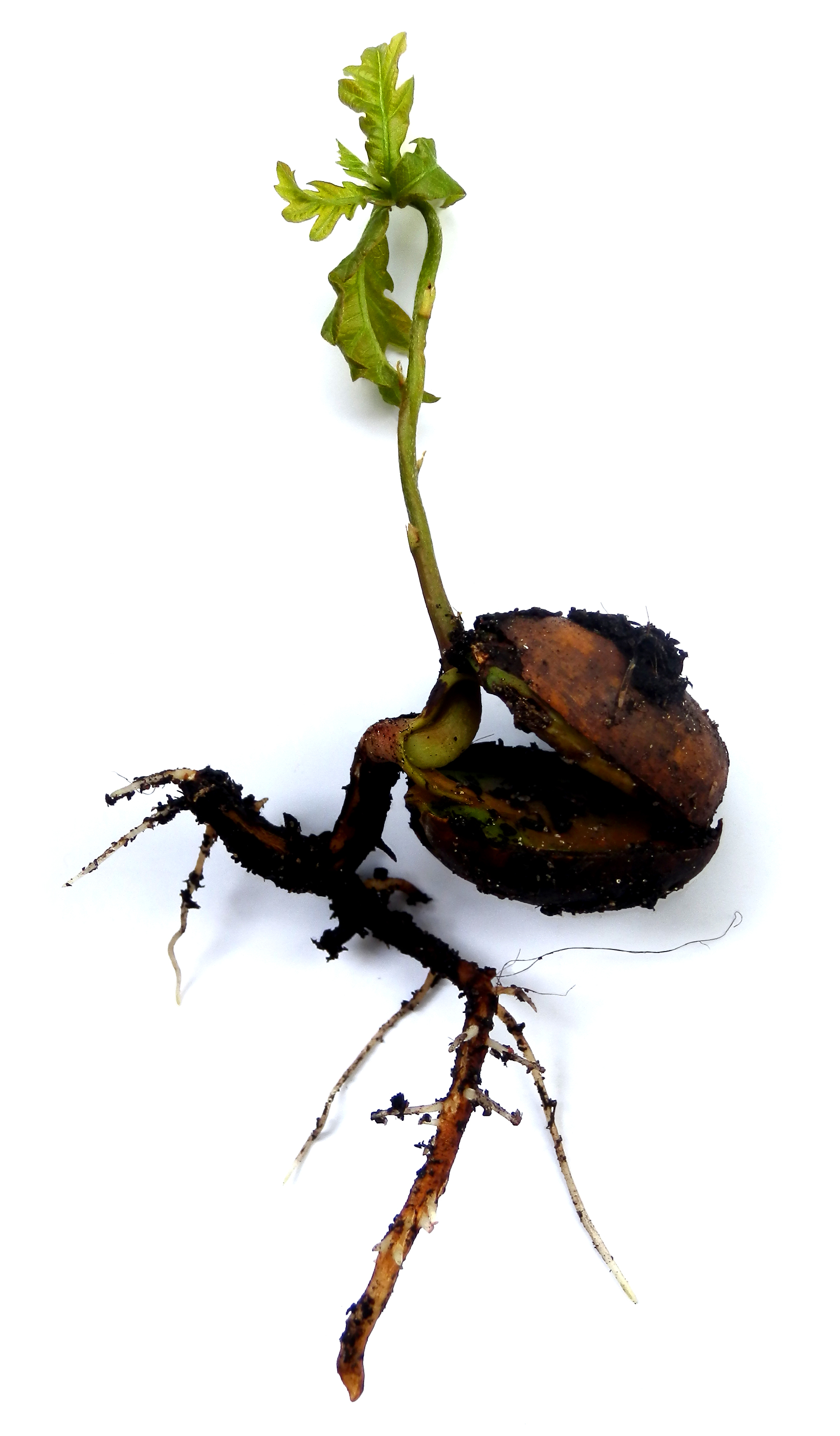
"The creation of a thousand forests is in one acorn" ― Ralph Waldo Emerson
Yet unboundedness is a apparent paradox in a closed ecosystem like Earth's biosphere ― or is it?
"Such a contradictory state of affairs is feasible only because the resources accessible to life can be used over and over again." ― J.I. Gitelson
A path toward deep ecology, and the realization of interconnectedness, is to cast aside what we have learned so that we might reconnect with a deep-seated, primordial awareness ― an awareness devoid of subject or object.
"The fundamental delusion of humanity is to suppose that I am here and you are out there."
― Hakuun Yasutani
Light and shadow are aspects of the whole, just as usefulness and uselessness are aspects of the whole. Taoist philosophy asserts that the moment we choose one side over the other we upset nature's balance.

Allowing ourselves to be immersed in interconnectedness involves the challenging discipline of embracing opposites. Gary Snyder writes about the meditative discipline of being at home in the whitewater and the eddies:
“Being the Stream

Meditation is not just a rest or retreat from the turmoil of the stream or the impurity of the world. It is a way of being the stream, so that one can be at home in both the white water and the eddies. Meditation may take one out of the world, but it also puts one totally into it.”


REFERENCES

Saturday, July 13, 2013

The Biosphere - A Finite Life Raft

Biosphere was coined and defined by 19th century geologist Eduard Suess as:
"The place on Earth's surface where life dwells."
The biosphere interacts with the elements of the lithosphere, hydrosphere, and atmosphere.

Trees, plants, and grasses are rooted in the pedosphere which is the topmost layer of the lithosphere comprised of soil, water, air, and living organisms.

The silhouette of a tree against the sky is a fitting metaphor for the biosphere as an interdependent and inter-connected system. Our biosphere is a delicate balance of inter-connected dependencies.

Bare Oak Tree
"Trees are poems the earth writes upon the sky, We fell them down and turn them into paper, That we may record our emptiness."
― Kahlil Gibran
The biosphere is a finite life raft.

An anthropocentric view is that conservation and ecological concerns are meant to serve human needs. A holistic, deep ecology view recognizes the inherent value of all living organisms regardless of their human utility.

REFERENCES

Popular