Showing posts with label Romanticism. Show all posts

Saturday, June 6, 2015

Range of Light

Study in clouds by John Constable
English landscape painters J. M. W. Turner and John Constable were two noted observers of the nature of light.

The sky is the source of light in Nature and it governs everything.
― John Constable

Both painters rendered landscapes bathed in what art historian Richard J. Boyle aptly described as "the veil of atmosphere".

Turner and Constable evoked the intensity of light and keen observation of Nature found in the poems of their Romantic era contemporaries Wordsworth, Coleridge, Byron, Shelley, and Keats.
Not so much life as on a summer's day
Robs not one light seed from the feather'd grass,

― John Keats, excerpt from the poem Hyperion
John Muir wrote of the quality of light he encountered in the High Sierras:
And from the eastern boundary of this vast golden flower-bed rose the mighty Sierra, miles in height, and so gloriously colored and so radiant, it seemed not clothed with light but wholly composed of it, like the wall of some celestial city.... Then it seemed to me that the Sierra should be called, not the Nevada or Snowy Range, but the Range of Light. And after ten years of wandering and wondering in the heart of it, rejoicing in its glorious floods of light, the white beams of the morning streaming through the passes, the noonday radiance on the crystal rocks, the flush of the alpenglow, and the irised spray of countless waterfalls, it still seems above all others the Range of Light.
― The Yosemite, chapter 1.
Late afternoon in the Eastern Sierra
Photo by Michael Hogarth


REFERENCES

Saturday, May 2, 2015

Origins of Deep Ecology

Bald eagle perched above nest
under a waxing gibbous moon
Romanticism emphasized emotion as a wellspring of aesthetic experience, particularly the awe felt in the presence of the sublimity of nature.

Tennyson's short poem The Eagle exemplifies the reverence of the Romantics.
The Eagle
Alfred, Lord Tennyson

He clasps the crag with crooked hands;
Close to the sun in lonely lands,
Ringed with the azure world, he stands.
The wrinkled sea beneath him crawls;
He watches from his mountain walls,
And like a thunderbolt he falls.

Center of Nature

Poets and artists of the Romantic period (1800-1850) were attuned to the beauty of nature. Romantics viewed humans at the center of nature. From a contemporary perspective, the notion of humans at the center of nature seems ego-centric and naive, but should be seen in the context of the hierarchical mono-theistic dogma of the time.

At One With Nature

Poets and writers in the early 20th century connected natural beauty to metaphorical human organs.
“beauty is a light in the heart.”
― Kahlil Gibran
The mid 20th century began a cultural pivot from the center of nature to being at one with nature.
“As if you were on fire from within. The moon lives in the lining of your skin.”
― Pablo Neruda
Deep ecology is a contemporary philosophy that recognizes the complex inter-relationships of all living organisms. Deep ecology recognizes the consequences of human consumption as an existential threat to life on earth.

Existential Threat

The population decline of the bald eagle is the quintessential narrative connecting human activity to existential threats. The bald eagle population, estimated to be 3-5 hundred thousand eagles in the early 18th century, declined to 412 nesting pairs in by the 1950s.

The human-generated pesticide DDT interfered with calcium metabolism, making the bird sterile or making the female's eggs too brittle to withstand the weight of a brooding adult.

Rachel Carson's Silent Spring, published in 1962, documented the detrimental impact of indiscriminate use of DDT. Ten years later agricultural use of DDT was banned in the US.
"Those who contemplate the beauty of the earth find reserves of strength that will endure as long as life lasts. There is something infinitely healing in the repeated refrains of nature -- the assurance that dawn comes after night, and spring after winter."
— Rachel Carson, Silent Spring


REFERENCES

Saturday, April 11, 2015

Summer into Winter

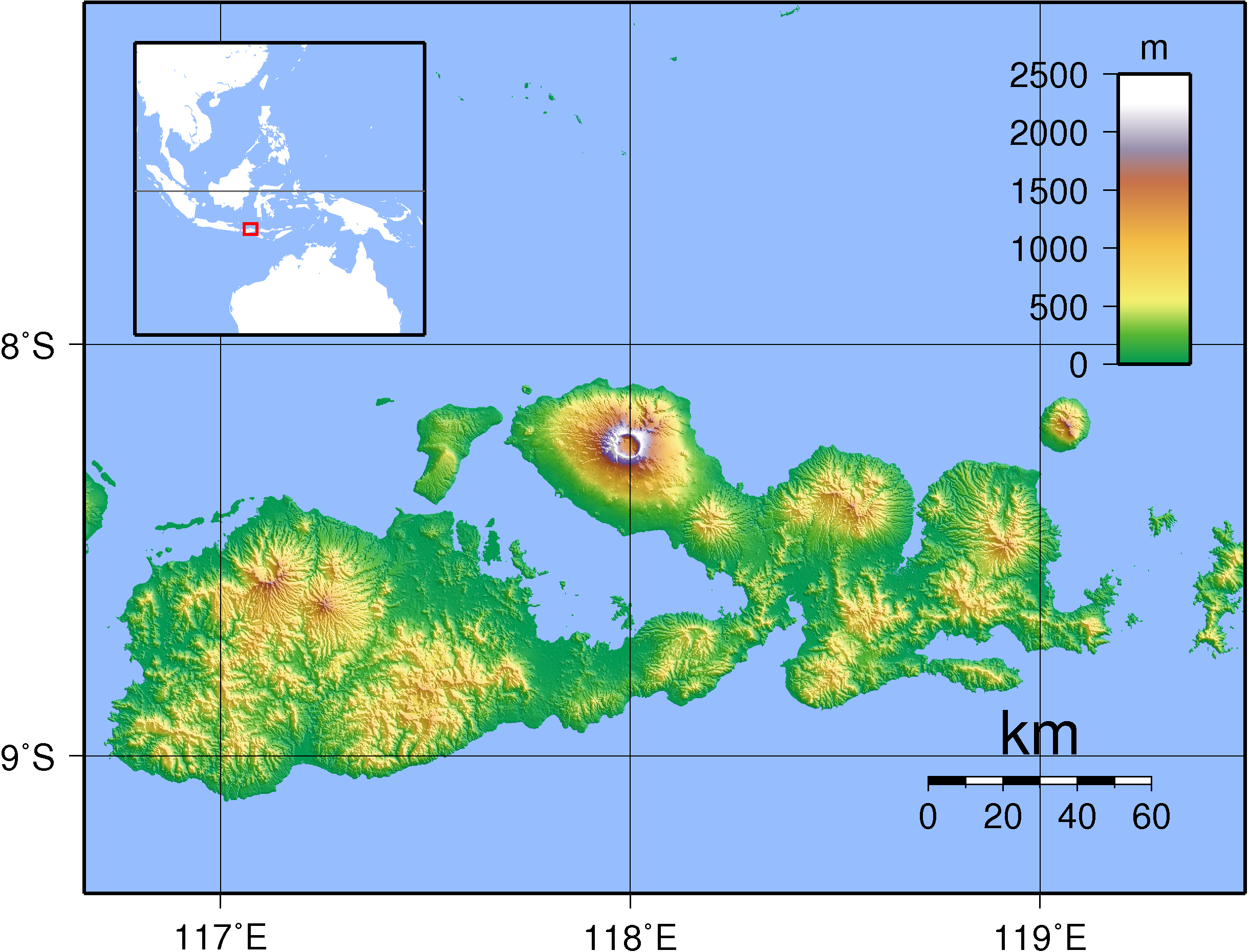
Mount Tambora
Two hundred years ago Mount Tambora erupted. The event occurred over a two-day period, April 10-11, in 1815.
It is considered the world's largest ash eruption since the last ice age.
Sulfate aerosols generated from the volcanic gases blocked sunlight turning the approaching summer into winter over much of the Northern Hemisphere.

The Tambora caldera is about 6 km or 3.7 miles wide by 7 km or 4.3 miles long and more than a kilometer or .6 miles in depth.
"Because Tambora ejected sulfurous gas that generated sulfate aerosols in the atmosphere, which block sunlight, the eruption created a ‘year without a summer,’ leading to food shortages — people were eating cats and rats — and very general hardship throughout Europe and eastern North America"
— Stephen Self
That summer, mean temperatures dropped by 0.7–1.3 °F (0.4–0.7 °C) around the world causing food shortages across the Northern Hemisphere.

Intense atmospheric haze led to unusually spectacular sunsets like those painted by the Romanticist landscape painter J. M. W. Turner (1775-1851).

J. M. W. Turner Sunsets


REFERENCES

Popular