Showing posts with label Refraction. Show all posts

Saturday, April 2, 2016

Qualities of Sunlight

Chromaticities of black-body light
of various temperatures
source: User:PAR
The hue of Sunlight changes according to its angle relative to terrestrial observers.

The blue hour, the golden hour, alpenglow and the belt of venus are subjective phrases we use to describe our sensory experiences of the color of Sunlight.

Color temperature is an objective reading of the hue of a light source in units of Kelvin (K).

Warmer colors, yellowish white through red, or about 2,700 to 3,000 K are seen shortly after Sunrise or shortly before Sunset.

Sunset at Newport Beach
by Bert Kaufmann

A rising or setting Sun produces light described by photographers as the golden hour. Daylight is softer and much warmer during the golden hour than during the middle of the day when the Sun is higher in the sky. The softer quality of light during the golden hour is because highlights are muted and shadows are less dark.
Keep your face to the sun and you will never see the shadows.
― Helen Keller
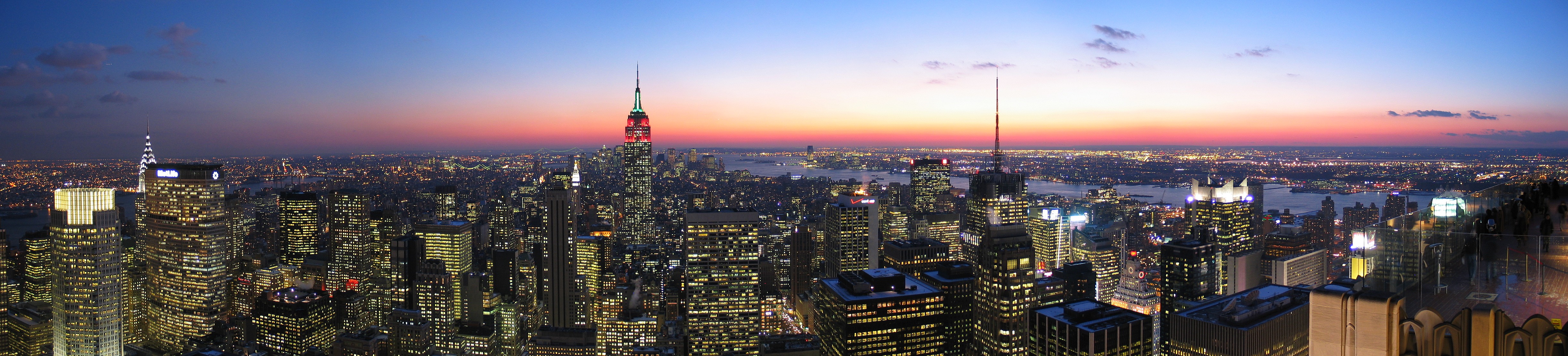
During twilight, shortly after the Sun has set or shortly before the Sun has risen, indirect Sunlight produces cooler colors over 5,000 K (Kelvin).

View south from the observation deck on Rockefeller Center
by Daniel Schwen

The cooler bluish quality of light is called the blue hour.

Unlike the golden hour or the blue hour, alpenglow is caused by a projection of backscattered Sunlight onto topographic features like mountains.
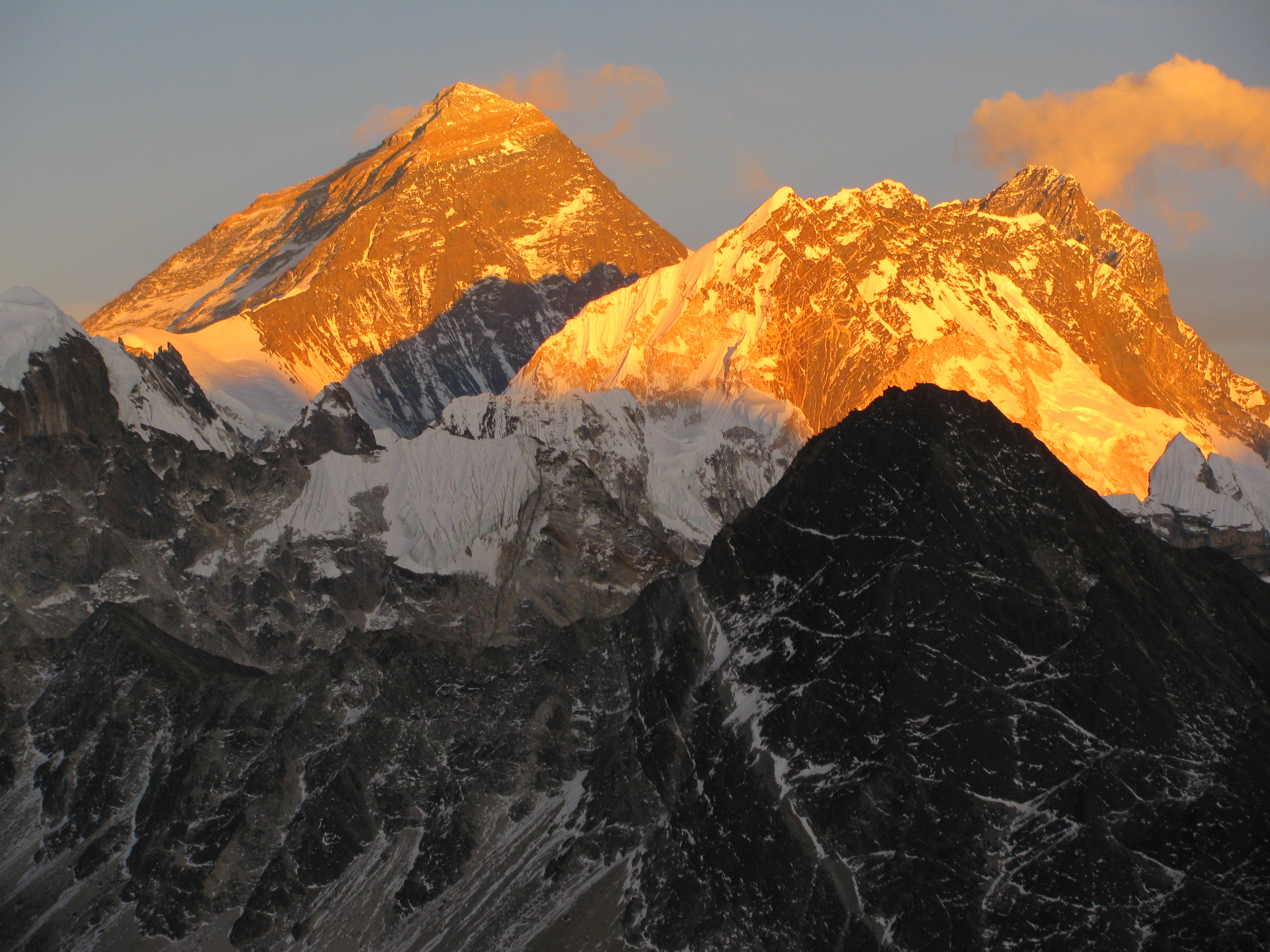
Alpenglow projected on Mount Everest
source: NASA Goddard Space Flight Center

Alpenglow occurs when a topographic high like Mount Everest, positioned opposite the Sun, receives a band of light that has reflected off airborne moisture particles in the lower atmosphere causing a reddish glow.

An atmospheric phenomena observed long after a Sunset or long before a Sunrise is called the belt of venus.

Pinkish glow called the belt of venus
source: ESO

The belt of venus is a glowing pinkish arch visible 10°-20° above the horizon. Like alpenglow, the belt of venus is due to backscattered Sunlight. The belt of venus is caused by the refraction of light through dust particles high in the atmosphere.
She turned to the sunlight
And shook her yellow head,
And whispered to her neighbor:
"Winter is dead."

― A.A. Milne, When We Were Very Young

REFERENCES

Saturday, September 26, 2015

Super Blood Moon

The confluence of three celestial phenomena happen tomorrow evening:
The last supermoon eclipse occurred in 1982.

Celestial phenomena are predictable because we have studied and understand planetary movements in the solar system.
Nothing comes close to the precision with which physics enables you to understand the world around you. It's the laws of physics that allow us to say exactly what time the sun is going to rise. What time the eclipse is going to begin. What time the eclipse is going to end.
― Neil deGrasse Tyson

Blood Moon
source: Anne Dirkse
Full moon

Tomorrow's full moon will be both a harvest moon and a blood moon.

A harvest moon is the full moon that falls closest to the fall equinox, which was last Wednesday.

A blood moons describes the red-tinted moon observed during a lunar eclipse. During a lunar eclipse, sunlight directed around the edges of the Earth refracts through Earth's atmosphere filtering out all but red, giving the moon its blood red tint.

Supermoon

Tomorrow's full moon will be a supermoon, or the full moon in perigee.

The moon orbits Earth in an elliptical path meaning that the distance between Earth and moon varies over an orbital cycle, giving us supermoons and micromoons.

A supermoon compared to a micromoon
source: Friends of NASA

Supermoons occur when the moon's orbital path transports it to the closest point to Earth. Micromoons occur when the moon is at its farthest point from Earth. A supermoon is about 31,000 miles closer to the Earth than a micromoon.
The closer proximity of a supermoon makes it appear 14% larger and 30% brighter.
The stronger gravitational pull of the supermoon causes wider variation in high and low tide levels.

Lunar Eclipse

Tomorrow's full moon will undergo a total eclipse.

Tomorrow night, the Earth will line up between the sun and the moon. The moon will gradually move into the shadow of the earth until it falls into darkness (i.e, a total eclipse).
Lunar eclipse
source: Luca

Under clear skies, tomorrow's lunar eclipse should be visible from longitudes stretching from the eastern Pacific to western Asia, including the Americans, Europe, and Africa.
Three things cannot be long hidden: the sun, the moon, and the truth.
― Gautama Buddha
The next supermoon eclipse occurs in 2033.

REFERENCES

Saturday, December 7, 2013

Sun Dog Prisms

Sun Dogs in Fargo, North Dakota.
February 18th, 2009.
The luminous patches that occasionally appear on each side of the sun during freezing atmospheric temperatures are called sun dogs.

According to folklore, sun dogs follow the sun like a dog follows its master.

Parhelia is the scientific term for sun dogs. Parhelion derives from the Greek parēlion which means beside the sun.

Sun dogs are an atmospheric optical phenomena. The luminous patch occurs when sunlight passes through and is refracted by hexagonal ice crystals.

The hexagonal ice crystals, falling with their long axis perpendicular to the earth, act as rotating prisms bending the sunlight. Because of the prism-like configuration of the falling crystals, sun dogs happen 22° to the left and 22° to the right of the sun viewed above the horizon.
Top View of Falling Crystal: Sunlight passing through two
surfaces of a rotating hexagonal ice crystal which is a 60° prism.

Sun dogs appear in art and literature. Shakespeare wrote about them in  King Henry VI:
EDWARD
Dazzle mine eyes, or do I see three suns?

King Henry VI, Part 3
RICHARD
Three glorious suns, each one a perfect sun;
Not separated with the racking clouds,
But sever'd in a pale clear-shining sky.
See, see! they join, embrace, and seem to kiss,
As if they vow'd some league inviolable:
Now are they but one lamp, one light, one sun.
In this the heaven figures some event.

EDWARD
'Tis wondrous strange, the like yet never heard of.
I think it cites us, brother, to the field,
That we, the sons of brave Plantagenet,
Each one already blazing by our meeds,
Should notwithstanding join our lights together
And over-shine the earth as this the world.
Whate'er it bodes, henceforward will I bear
Upon my target three fair-shining suns.

— King Henry VI, Part 3, Act II, Scene 1

Sunrise or sunset is the best time to observe sun dogs.

REFERENCES

Saturday, September 22, 2012

Ode to Dew

Drops of water formed by the condensation of moisture in the air is dew. Dew occurs when the moisture in the air is cooled to its dew point.

Shape

Dew drops assumes the shape that minimizes the sum of its gravitational energy and its surface tension. Surface tension is expressed as force per unit length. Water has a surface tension of 0.072 N/m.
Man's life is like a drop of dew on a leaf.
- Socrates
The shape of a dew drop cannot be described by a closed form mathematical function. The governing differential equations do not have a closed form solution, so must be integrated numerically to trace the profile of a drop (cf. The profile of a dew drop).

A drop of dew cupped in the leaf of the common garden nasturtium.
The person who doesn't scatter the morning dew will not comb gray hairs.
- Hunter S. Thompson
Refraction

The term refraction describes the deflection of light that occurs when light waves travel through a change in medium (e.g., from air to water). Water droplets refract light like a lens.
When we contemplate the whole globe as one great dewdrop, striped and dotted with continents and islands, flying through space with other stars all singing and shining together as one, the whole universe appears as an infinite storm of beauty.
- Travels in Alaska by John Muir, 1915, chapter 1, page 5.
Refraction Photograph by Markus Reugels
Photographer Markus Reugels uses the refraction of light in water to create still life images in a drop of water.

REFERENCES

Popular